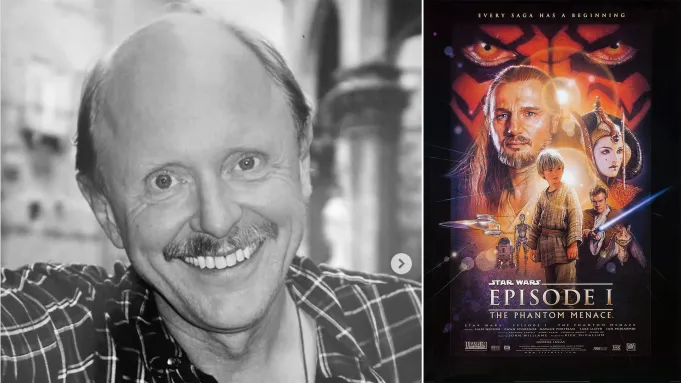
Jeff Olson Obituary Los Angeles CA Death-The entertainment industry and the global community of film lovers are mourning a profound loss. Jeff Olson, a legendary visual effects producer, veteran modelmaker, and a foundational pillar of Industrial Light & Magic (ILM), has passed away at the age of 77 in Los Angeles, California. When we talk about the fabric of modern cinema, we are largely talking about the intricate, invisible, and awe-inspiring work of behind-the-scenes artisans. For nearly a quarter of a century, Jeff Olson was one of the grand architects of our collective imagination. His career at ILM spanned the most transformative years in Hollywood history, guiding the visual effects industry from the tactile era of practical miniatures and blue screens into the boundless frontier of digital imagery and computer-generated graphics.
News of his passing has sent ripples through Los Angeles and the broader cinematic community. To simply say he worked on movies is a massive understatement. He helped build the starships we dreamed of flying, the distant planets we wished we could explore, and the magical creatures that felt as real as the person sitting next to us in the theater. From Star Wars to Star Trek, from Who Framed Roger Rabbit to the explosive blockbusters of the 2010s, Olson’s fingerprints are permanently embedded in the DNA of pop culture. In this comprehensive tribute, we are going to explore the massive legacy left behind by this visual effects pioneer, his incredible technical achievements, his mentorship, and the surprisingly profound ways the technology he helped pioneer now intersects with modern media forensics and legal philosophy.
Remembering Jeff Olson: A Titan of Cinematic Magic
Born and eventually carving out his legendary career in the heart of the entertainment industry, Jeff Olson was an artist whose medium was reality itself. At 77, his passing marks the end of an era for the veterans who physically built the illusions of the 1980s and 1990s. He was a man who possessed a rare combination of skills. He had the microscopic attention to detail required of a master modelmaker, the visionary foresight needed to embrace early computer-generated imagery, and the empathetic leadership required to steer massive teams of stressed, overworked artists toward a singular creative goal.
When Industrial Light & Magic confirmed his passing, the studio did not just list his filmography. They spoke of his character. They highlighted a career marked by an unwavering commitment to his teams, leading crews through incredibly complex and exhausting production schedules with a blend of humor and kindness that left a lasting impression. In an industry notoriously driven by ego and extreme pressure, Olson was known as a grounding force. He was the kind of leader who could troubleshoot a failing robotic miniature at 2:00 AM while keeping the crew laughing, and years later, manage a multi-million dollar digital rendering pipeline with the exact same calm demeanor.
His death in Los Angeles, the city where so much of cinematic history is written and where the visual effects industry fundamentally changed the global entertainment landscape, feels incredibly poignant. Los Angeles is a city built on dreams and illusions, and Jeff Olson was one of its finest dream weavers.
The Golden Age of Practical Effects: Crafting Magic by Hand
To truly understand the magnitude of Jeff Olson’s career, you have to understand the era of filmmaking in which he got his start. When Olson joined Industrial Light & Magic in 1985, the visual effects world was a highly tactile, physical space. There were no rendering farms that could instantly generate a hyper-realistic city out of pixels. If a script called for a massive spaceship to crash into a planet, someone had to actually build that spaceship out of plastic, wood, metal, and resin. They had to wire it with tiny incandescent lights, mount it on a motion-control rig, and film it against a massive blue screen.
This was the golden age of practical effects, and modelmaking was arguably the most respected craft in the visual effects hierarchy. Modelmakers were engineers, sculptors, painters, and architects rolled into one. They employed a technique known as “kitbashing,” where they would take pieces from commercial model kits—everything from World War II tanks to Formula 1 race cars—and repurpose the tiny plastic greebles to add scale and texture to the hulls of starships.
Jeff Olson thrived in this environment. As a modelmaker, his job was to trick the human eye. He had to understand how light would interact with physical textures at a miniature scale to make a three-foot-long hunk of plastic look like a mile-long intergalactic cruiser. It required a deep understanding of physics, photography, and practical mechanics. He spent hours, days, and weeks meticulously crafting environments and vehicles that would be subjected to high-speed cameras, pyrotechnics, and intense scrutiny on a massive movie theater screen.
The ILM Years: Defining an Era in Cinema
Industrial Light & Magic, founded by George Lucas to create the groundbreaking effects for the original Star Wars in 1977, was already the undisputed king of the visual effects world when Olson walked through its doors in 1985. But the company was on the precipice of a massive technological shift, and Olson was right there on the front lines, navigating the evolution with expertise and a willingness to adapt.
The Foundational Years: Howard the Duck, Willow, and Roger Rabbit
His first major credit as a modelmaker for ILM was on the 1986 film Howard the Duck. While the film itself is often remembered for its quirky reception, the behind-the-scenes practical effects work was undeniably ambitious. Building intricate animatronics, scaled sets, and composite elements was a grueling task that required immense coordination.
But it was his subsequent work that truly cemented his reputation. Olson contributed to Ron Howard’s 1988 fantasy epic Willow. This film is historically significant in the VFX world because it marked one of the earliest successful uses of digital “morphing” technology, bridging the gap between practical makeup effects and computer algorithms. Olson’s modelmaking and set-building skills helped ground the fantasy elements, ensuring that the physical world the actors interacted with was as believable as the pioneering digital magic happening in post-production.
He then brought his talents to Who Framed Roger Rabbit (1988), a monumental achievement in cinematic history that seamlessly blended live-action cinematography with 2D animation. To make the animated characters feel like they actually existed in the real world, the visual effects team had to build complex practical models and robotic rigs that interacted with the live-action props. When Roger Rabbit grabbed a real plate or hid under a real table, there was physical, mechanical model work making that interaction possible. Olson’s contributions helped create an illusion so flawless that audiences fundamentally forgot they were watching a cartoon interact with Bob Hoskins.
Throughout the late 1980s and early 1990s, Olson’s resume expanded with prominent sequels and massive blockbusters. He lent his modelmaking expertise to Ghostbusters II, Back to the Future Part III, Die Hard 2, and the fire-ravaged physical environments of Backdraft. Each of these films presented unique physical challenges, from crafting intricate miniature train models to building scaled airport runways that could be convincingly destroyed.
Star Trek: Shaping the Final Frontier
Beyond the fantasy and comedy genres, Jeff Olson became heavily involved in the revitalization of the greatest science fiction franchises of all time. He served as the ILM model department supervisor on Star Trek Generations (1994). This was a monumental film for the franchise, as it transitioned the cast of The Next Generation to the big screen and famously destroyed the iconic U.S.S. Enterprise-D. Overseeing the model department for a Star Trek film meant dealing with a deeply passionate, detail-oriented fanbase that would scrutinize every single panel line and glowing nacelle.
The success of Generations led directly to his role on Star Trek: First Contact (1996). However, by this time, his role had evolved. He stepped up to become the visual effects producer. First Contact is widely considered one of the best films in the franchise, featuring the terrifying Borg and the sleek new Enterprise-E. As a VFX producer, Olson was no longer just building the models; he was managing the massive logistics, budgets, and scheduling of the entire visual effects pipeline, coordinating the efforts of digital artists, physical model makers, and compositors to deliver the film’s stunning space battles.
Years later, he would return to the final frontier, serving as a visual effects producer on J.J. Abrams’ visually spectacular 2009 Star Trek reboot, bringing his decades of experience to a completely reimagined, highly kinetic, digitally driven universe.
Bridging Two Worlds: The Phantom Menace and the CGI Revolution
Perhaps no single project defines Jeff Olson’s legacy quite like Star Wars: Episode I – The Phantom Menace (1999). Serving as a visual effects producer, Olson was instrumental in bringing George Lucas’s incredibly dense, visually overwhelming vision to life.
The Phantom Menace is often misremembered as a purely CGI film. In reality, it utilized more practical miniature models than the entire original Star Wars trilogy combined. Olson’s unique background made him the perfect leader for this project. He understood the tactile reality of physical models—the intricate scaled buildings of Tatooine, the sprawling miniature grandstands of the Podrace, the physically constructed architecture of Naboo—but he also understood how to integrate these physical objects with the most advanced computer-generated imagery the world had ever seen.
The workload was staggering. ILM produced nearly 2,000 visual effects shots for the film, a record-breaking number at the time. Olson had to manage teams that were essentially inventing new software while simultaneously hand-carving thousands of tiny Q-tip-sized spectators for the Podrace sequence. Speaking of the Podrace, in a wonderful hidden gem that fans treasure, Olson actually made a brief, uncredited on-screen cameo in the film. If you look closely at Jabba the Hutt’s private viewing box during the tense, high-speed Boonta Eve Classic, you can spot the veteran modelmaker himself, forever immortalized in the galaxy far, far away.
Transitioning to Visual Effects Producer: A Leader of the Digital Age
The shift from being a hands-on modelmaker to a visual effects producer is not an easy one. It requires a complete change in perspective. Instead of focusing your energy on a single physical object, you have to manage a sprawling ecosystem of human resources, cutting-edge technology, studio expectations, and massive budgets.
As the 2000s rolled in, the industry fundamentally changed. Practical model shops were shrinking, and digital server farms were growing. Jeff Olson survived and thrived in this transition because he understood that the core principle of visual effects had not changed: the goal was still to tell a compelling story and trick the eye. The tools were just different.
During his later years at ILM, he produced the visual effects for a string of highly complex films. On Lemony Snicket’s A Series of Unfortunate Events (2004), he oversaw a massive hybrid approach. The film required a whimsical, gothic, hyper-stylized look. Olson managed teams that utilized scaled mansion models overlaid with digital matte paintings and heavily augmented practical fire effects. He even navigated the complex digital augmentation of the child actors’ performances.
His credits during this era are a testament to his versatility: the alien invasion thrills of M. Night Shyamalan’s Signs (2002), the bizarre sci-fi horror of Dreamcatcher (2003), the historically accurate nautical warfare of Master and Commander: The Far Side of the World (2003), the catastrophic water dynamics of Poseidon (2006), the high-octane stunts of Rush Hour 3 (2007), and the massive digital pirate armadas of Pirates of the Caribbean: At World’s End (2007). In each of these projects, Olson was the steady hand guiding hundreds of digital artists to the finish line.
Beyond ILM: Polygon Entertainment and the Transformers Era
After an incredible, nearly 25-year run at Industrial Light & Magic, Olson departed the legendary studio in 2009. But he was far from finished with the industry. The visual effects world had decentralized, with smaller studios taking on massive amounts of work.
Olson brought his unparalleled expertise to Polygon Entertainment, continuing his work as a VFX producer. He lent his steady hand to a variety of projects, including the apocalyptic South Korean disaster film Tidal Wave and the 2011 dystopian sci-fi action film Priest. He also produced high-end commercial work, proving that his skills were highly adaptable to different formats and production timelines.
His final major cinematic credit brought him back to the absolute pinnacle of blockbuster spectacle. He served as the visual effects manager for Michael Bay’s Transformers: Dark of the Moon in 2011. This film was a monumental undertaking, featuring some of the most complex, rendering-intensive, photorealistic CGI destruction ever put to film. Just as he had done on The Phantom Menace a decade prior, Olson helped manage a project that crossed the $1 billion mark at the global box office, proving that his understanding of scale, spectacle, and team management remained sharp until the very end of his career.
The Intersection of Visual Effects, Legal Philosophy, and Media Forensics
While Jeff Olson dedicated his life to the art of cinematic illusion, crafting spaceships, aliens, and fantasy worlds strictly for entertainment, the underlying technology that he and his colleagues at ILM pioneered has evolved in ways that have profoundly impacted society. As visual effects transitioned from the physical realm to the digital realm, Hollywood essentially created the blueprint for manipulating digital reality. Today, the ability to seamlessly alter video and audio is no longer confined to the render farms of Industrial Light & Magic; it is available to the masses. And this has sparked a massive, ongoing crisis in the realms of media forensics and legal philosophy.
The Legacy of Digital Deception
In the 1980s, if you saw a photograph or a video of an event, the inherent assumption was that it was real. The phrase “the camera never lies” was a fundamental tenet of our societal trust in media. The pioneers of VFX, like Olson, were the first people to successfully prove that the camera could, in fact, lie spectacularly well. They spent decades figuring out how to perfectly match lighting, grain structure, shadows, and motion blur so that a digital creation was indistinguishable from live-action footage.
Fast forward to the modern era, and the techniques developed for blockbuster cinema have paved the way for “deepfakes,” AI-generated imagery, and hyper-realistic digital manipulation. The philosophical question that VFX artists asked themselves—How do we make the fake look entirely real?—has now become the primary burden of the global legal system, which is forced to ask: How do we prove what is actually real?
The Legal Burden of Truth: From Hollywood Magic to High-Profile Cases
In modern legal philosophy, the standard of evidentiary truth is undergoing a massive paradigm shift. The courts are currently grappling with the reality that digital video and audio can be completely synthesized. This is where the intersection of Hollywood VFX history and modern law becomes incredibly fascinating. The exact same digital image processing techniques, rotoscoping concepts, and pixel-tracking algorithms that were invented to put dinosaurs in Jurassic Park or aliens in Star Wars are now the foundation of forensic media analysis used by expert witnesses in courtrooms.
We have seen this intense scrutiny of digital reality play out heavily in recent high-profile legal battles. For example, during the extensively covered trials of Harvey Weinstein, the legal teams heavily contested the authenticity, timeline, and context of digital communications, video evidence, and audio recordings. The courtroom debates required rigorous forensic media analysis to prove that the digital footprints presented had not been altered, spliced, or manipulated. The legal philosophy surrounding the admissibility of digital evidence relies entirely on experts who understand the anatomy of a digital file—an anatomy that was mapped out by the visual effects industry decades prior.
Similarly, in the highly publicized defamation lawsuits surrounding Rudy Giuliani and the aftermath of the 2020 election, the weaponization of manipulated media and the broadcasting of digital falsehoods took center stage. The legal battles hinged on the illusion of truth and how easily digital platforms could be used to present fabricated narratives as reality. The courts were forced to dissect broadcasts, verify raw footage against edited clips, and establish philosophical and legal boundaries for digital defamation.
When Jeff Olson and his peers at ILM were figuring out how to composite digital fire onto a practical model in Lemony Snicket, they were solving a technical math problem. They likely did not realize they were helping to lay the technological foundation for an era where the highest courts in the land would have to hire forensic specialists to determine if a video of a politician or a public figure was a seamless digital forgery. The transition from physical reality to digital manipulation is Olson’s artistic legacy, but it is also one of the most complex legal and philosophical challenges of the 21st century.
Mentorship, Media Presence, and Community Impact
Beyond his credits on the silver screen and the unintended technological ripples of his industry, Jeff Olson’s true legacy is the impact he had on the people he worked with. The visual effects industry is notoriously grueling. It is characterized by endless revisions, impossible deadlines, and intense studio pressure. Burnout is incredibly common.
Yet, the tributes pouring in for Olson highlight a man who shielded his teams from that toxicity. He was a mentor in the truest sense of the word. Having worked his way up from the physical model shop to the producer’s desk, he understood the struggles of the artists on the ground floor. He never lost his appreciation for the meticulous, back-breaking work required to generate a single second of usable footage.
His media presence, while not as front-and-center as the directors he worked for, was deeply respected within the industry. He was featured in several behind-the-scenes documentaries, most notably From Star Wars to Star Wars: The Story of Industrial Light & Magic and The Beginning: Making Star Wars: Episode I The Phantom Menace. In these documentaries, fans get a glimpse of the real Jeff Olson: pragmatic, highly intelligent, fiercely dedicated to his craft, and always ready with a dry, humorous observation about the chaos of filmmaking.
His community impact extends to the countless junior artists, modelmakers, and production assistants he hired, trained, and championed over his 25-year tenure at ILM. Many of the people who learned the ropes under his supervision in the late 90s and early 2000s are now the lead supervisors and studio heads running the visual effects industry today. They carry his philosophies on leadership, kindness, and artistic integrity forward.
The Enduring Legacy of a Visual Effects Pioneer in Los Angeles
When Jeff Olson passed away at 77 in Los Angeles, CA, the film industry lost a true pioneer. His life was dedicated to the pursuit of wonder. He existed in the background so that the magic on screen could take center stage. Every time a child looks up at the screen in awe as a starship jumps to lightspeed, or a fantasy hero battles a terrifying monster, they are experiencing the ripple effects of Olson’s life’s work.
He witnessed the death of the practical model era and the birth of the digital age, and rather than being left behind, he chose to lead the charge. He was a bridge between two distinct eras of Hollywood history. While the physical models he built may now sit in archives and museums, and the digital files he produced are preserved on servers, his true legacy lives on in the boundless imagination of the audiences he entertained and the artists he inspired. Rest in peace, Jeff Olson. The cinematic galaxy is far richer because you were a part of it.
Frequently Asked Questions (FAQ)
Who was Jeff Olson? Jeff Olson was a highly respected visual effects producer, model supervisor, and modelmaker who spent nearly 25 years working at Industrial Light & Magic (ILM). He was instrumental in creating the visual effects for major blockbuster franchises, including Star Wars, Star Trek, Ghostbusters, and Transformers. He passed away in Los Angeles, California, at the age of 77.
What did Jeff Olson do on Star Wars: Episode I – The Phantom Menace? On The Phantom Menace, Olson served as one of the visual effects producers. He played a crucial role in managing the massive team of artists who blended the film’s extensive practical miniature models (like the Podrace arena and the city of Theed) with groundbreaking computer-generated imagery.
Did Jeff Olson act in any movies? While not a professional actor, Jeff Olson does have a famous uncredited cameo. He appears briefly on-screen in Star Wars: Episode I – The Phantom Menace as a spectator in the Podrace sequence, sitting in Jabba the Hutt’s private viewing box.
What is the difference between a modelmaker and a visual effects producer? A modelmaker is a physical artist and engineer who builds scaled miniature vehicles, environments, and creatures by hand using materials like plastic, wood, and resin. A visual effects producer is a management and leadership role responsible for overseeing the entire visual effects budget, schedule, and pipeline of a movie, coordinating teams of hundreds of artists to deliver the final digital shots. Olson successfully transitioned from the former to the latter during his career.
How did Jeff Olson impact the Star Trek franchise? Olson made massive contributions to the Star Trek franchise across different eras. He was the model department supervisor for Star Trek Generations (overseeing the crash of the Enterprise-D), the visual effects producer for Star Trek: First Contact (introducing the Enterprise-E and the Borg Cube), and returned as a visual effects producer for J.J. Abrams’ 2009 Star Trek reboot.
Why are visual effects techniques relevant to modern legal philosophy? The techniques pioneered by early visual effects artists—seamlessly altering imagery, tracking pixels, and blending fake elements into real footage—have evolved into modern technologies like deepfakes. This has sparked a crisis in legal philosophy and media forensics, as courts must now employ experts to determine whether digital video and audio evidence in high-profile cases has been manipulated using the very concepts born in Hollywood VFX studios.
What were Jeff Olson’s final projects? After leaving ILM in 2009, Olson joined Polygon Entertainment. He worked on films like Tidal Wave and Priest. His last major blockbuster credit was serving as the visual effects manager for Michael Bay’s Transformers: Dark of the Moon in 2011.
How is Jeff Olson remembered by the ILM community? In their official tribute, Industrial Light & Magic remembered Olson not just for his incredible technical and artistic contributions, but for his character. He was praised for his unwavering commitment to his team, his ability to navigate momentous industry changes, and for leading his crews through high-pressure situations with a signature blend of humor and kindness.