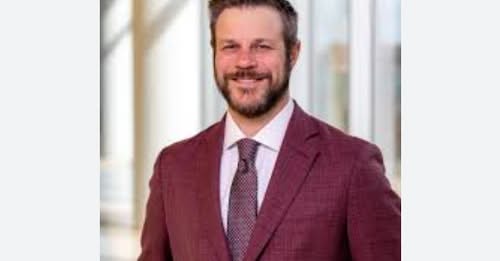
Jason Stoneback MD Denver CO Accident-When you or a loved one is involved in a catastrophic accident on the busy streets of Denver, Colorado, your entire world stops spinning. The screech of tires, the shattering of glass, and the sudden, terrifying realization that your body has been severely damaged can leave you feeling completely hopeless. In these dark moments, the path forward seems impossible to navigate. You are suddenly thrust into a chaotic whirlwind of emergency rooms, flashing ambulance lights, aggressive insurance adjusters, and complex legal jargon.
But there is hope. In Denver, the intersection of world-class medical innovation and robust personal injury law provides a lifeline to victims of horrific crashes. At the very center of this medical landscape is Dr. Jason Stoneback, a pioneering orthopedic trauma surgeon whose name has become synonymous with saving lives and limbs across Colorado.
If you are researching a “Jason Stoneback MD Denver, CO accident,” chances are you are looking for answers. You might be a patient facing a grueling recovery, a family member desperate to understand the medical procedures ahead, or an accident victim trying to figure out how to pay for these state-of-the-art surgeries through a personal injury claim.
This comprehensive guide is designed to walk you through every single aspect of this journey. We will dive deep into the miraculous medical procedures performed by Dr. Stoneback, explore the harrowing true stories of Denver accident victims, and break down the complex legal philosophy you need to understand to get the justice and financial compensation you deserve.
The Intersection of Catastrophic Accidents and World-Class Medicine in Denver
Denver is a rapidly growing metropolis. With population booms come crowded highways like I-25 and I-70, distracted drivers, and a tragic increase in severe motor vehicle collisions, motorcycle crashes, and pedestrian accidents. When a high-speed collision occurs, the human body is subjected to massive kinetic forces that it simply wasn’t designed to withstand.
The injuries resulting from these accidents are rarely simple. We aren’t talking about a fractured wrist or a sprained ankle. We are talking about shattered femurs, crushed pelvises, massive soft tissue loss, severed nerves, and limbs that are hanging on by a thread. In the past, emergency room doctors facing these types of mangled extremities had only one viable option: amputation. The primary goal was simply to keep the patient from bleeding to death or succumbing to a massive infection.
Today, the narrative has drastically changed. Thanks to specialized medical centers in the Denver area, victims of horrific accidents have access to limb salvage techniques that were considered science fiction just two decades ago. But securing this level of care requires navigating a complex web of medical referrals, insurance approvals, and legal claims. You can’t just focus on the medical side; you have to understand the legal side to ensure your recovery is fully funded.
Who is Dr. Jason Stoneback MD?
To understand the modern landscape of orthopedic trauma care in Colorado, you have to know who is leading the charge. Dr. Jason Stoneback is the Chief of Orthopedic Trauma and Fracture Surgery at the University of Colorado Hospital (UCHealth) in Aurora, just outside of Denver. But his title barely scratches the surface of what he actually does for accident victims.
The Visionary Behind the Scalpel
Dr. Stoneback didn’t take a traditional path to becoming one of the most respected trauma surgeons in the country. Interestingly, he actually competed in rodeo before trading his boots for a surgical scrub cap. That gritty, relentless determination he learned in the rodeo arena translates directly to the operating room. He is known for taking on the absolute worst cases—the patients who have been told by other doctors that there is zero hope and that their arm or leg must be amputated.
He specializes in the treatment of simple and complex fractures, non-unions (bones that refuse to heal), malunions (bones that heal crookedly), limb-length discrepancies, severe orthopedic infections, and post-traumatic limb salvage. When an accident victim is airlifted to UCHealth with a crushed limb, Dr. Stoneback is the man they call to put the puzzle pieces back together.
The UCHealth Limb Restoration Program
In 2013, Dr. Stoneback founded the UCHealth Limb Restoration Program. This program is uniquely equipped to handle complex, limb-threatening injuries that most standard hospitals simply cannot manage.
The genius of this program is its multidisciplinary approach. When a patient comes in after a devastating car accident, they aren’t just seen by one surgeon. Dr. Stoneback leads a massive team of plastic surgeons, vascular surgeons, specialized nurses, physical therapists, infectious disease experts, and pain management specialists. They meet weekly in a collaborative environment to map out highly customized treatment strategies for every single patient.
This holistic approach is critical because saving a limb isn’t just about fixing a bone with a titanium rod. It’s about ensuring adequate blood flow, grafting skin to cover massive wounds, fighting off relentless hospital-acquired infections, and eventually rehabilitating the muscle so the patient can actually use the limb again.
True Stories of Denver Accidents and Miraculous Recoveries
Medical jargon and hospital credentials can only tell you so much. To truly grasp the impact of Dr. Stoneback’s work on accident victims, you have to look at the real-life stories of people whose lives were shattered in a fraction of a second and painstakingly rebuilt over months and years.
The Riverdale Road Hit-and-Run: Rebuilding an Arm with a Leg
Consider the terrifying case of Michael Klement. It was a typical spring evening in Thornton, Colorado. Michael was driving his SUV along Riverdale Road with his wife and son. Out of nowhere, a car traveling in the opposite direction crossed the center dividing line and violently sideswiped the driver’s side of Michael’s vehicle.
The kinetic impact caved in the heavy metal door, instantly pinning Michael’s left upper arm. The other driver fled the scene, leaving Michael fading in and out of consciousness in a ditched vehicle. When the fire department finally used the Jaws of Life to peel the car door off him, emergency responders took one look at his arm and immediately called for a helicopter airlift to UCHealth.
His arm was described as a mangled mass of devastated muscle, shattered bone, and severed vessels. The crash had literally sheared away four inches of his humerus (the long bone in the upper arm), leaving a massive gaping hole.
Dr. Stoneback and the Limb Restoration team took immediate action, devising a surgical plan that sounds almost impossible. To save the arm, they decided to make Michael his own donor. Dr. Stoneback harvested a segment of Michael’s fibula (calf bone) from his leg, complete with its living blood vessels and a patch of skin. They meticulously transplanted this leg bone into the massive gap in his arm, attaching the tiny blood vessels under a microscope to ensure the transplanted bone would stay alive.
The patch of leg skin left on the arm served a brilliant purpose: it acted as a visible window to monitor the blood flow. If the skin stayed pink and healthy, the team knew the bone underneath was thriving. Because of this incredible intervention, Michael kept his arm and regained his ability to move his fingers, a miracle born from a horrific hit-and-run accident.
The Overseas Scooter Crash: Battling Infection and Amputation
Accidents don’t always happen close to home. Josh Bryan was celebrating his 27th birthday by riding a scooter on an island in the Gulf of Thailand. A patch of loose gravel sent him spinning out of control. The crash snapped his right femur in two and completely shattered his left femur into dozens of fragments.
Trapped in a foreign, ill-equipped hospital, Josh underwent botched surgeries that resulted in a massive, aggressive bone infection. By the time he was medically evacuated back to Denver, massive sections of his bone had died. The hardware placed in Thailand was failing, and the infection was racing through his bloodstream.
Under the care of Dr. Stoneback, Josh underwent a grueling series of surgeries. The team had to remove the infected hardware and physically cut out six inches of dead, rotting bone from his leg. Dr. Stoneback then used an external fixator and antibiotic-impregnated cement beads to stabilize the limb and attack the infection directly at the source. Once the infection was finally defeated, they bridged the massive gap in his leg. Today, Josh isn’t just walking; he has reclaimed his life alongside his wife, Melissa, a nurse who rushed across the world to save him.
The Front Range Military Collision: Saving a Soldier’s Shattered Leg
First Sergeant Jandl Scott had survived deployments to Kuwait and Afghanistan, jumping out of airplanes and serving his country in active war zones. Yet, his most life-threatening battle happened right here in Colorado on his morning commute to work in Aurora.
He was struck head-on in a horrific car crash. The impact was so severe it drove his bone right through his skin. In the Intensive Care Unit, the initial prognosis was devastating. The on-call doctors gently told him there was nothing left to save; his leg would have to be amputated.
Refusing to accept defeat, Jandl’s luck changed when Dr. Stoneback’s team took over his case. They boldly told him, “We are in the business of saving limbs.” Over the course of five grueling operations involving complex rods, plates, massive screws, and bone grafted directly from Jandl’s own hip, they managed to put the shattered pieces back together. The soldier who survived the Middle East survived the streets of Colorado, keeping the leg that was nearly lost to twisted metal.
Revolutionizing Trauma Care: The Science of Osseointegration
For some accident victims, the trauma is simply too catastrophic, and the limb cannot be saved despite the best efforts of modern medicine. In years past, this meant a lifetime of struggling with traditional socket prostheses. These sockets are notorious for causing painful chafing, skin breakdowns, blisters, and severe bursitis, often leaving amputees confined to wheelchairs because they simply cannot bear the pain of wearing their artificial leg.
Dr. Jason Stoneback has brought a revolutionary solution to Denver that is changing the entire landscape of post-accident amputee care: Osseointegration.
What Exactly is Osseointegration?
Osseointegration (OI) sounds like a term pulled from a sci-fi movie, but it is a very real, highly advanced surgical procedure. Instead of slipping a residual limb into a bulky, painful plastic socket, Dr. Stoneback surgically implants a customized titanium rod directly into the patient’s living bone marrow.
Over time, the patient’s natural bone actually grows into and fuses with the porous titanium. Once this fusion is complete, a small metallic abutment protrudes through the skin. The patient can then simply “click” their robotic or artificial prosthetic leg directly onto this abutment.
The benefits are staggering. Because the prosthesis connects directly to the skeleton, amputees experience a phenomenon called “osseoperception.” They can literally feel the ground beneath them. They can sense whether they are walking on carpet, gravel, or grass through the vibrations traveling up the metal implant directly into their nervous system. It restores a completely natural range of motion and eliminates the skin issues that plague traditional amputees.
Getting Athletes Back on the Track
Take the case of Jason Macom, an elite para-cyclist. Years ago, a devastating bicycle accident led to a below-the-knee amputation. Despite this, he fought his way to the top of the para-cycling world, winning national titles. However, the relentless friction from his socket prosthesis eventually caused so much pain that he couldn’t even put his artificial leg on. He was sidelined, confined to forearm crutches, and sinking into a deep depression.
He discovered Dr. Stoneback and the Limb Restoration Program. After undergoing two-stage osseointegration surgery, his life completely transformed. Freed from the torturous socket, his power transfer to the bicycle pedal became direct and absolute. He returned to the velodrome, chasing his dream at the world championships, entirely because of the groundbreaking medical technology available right here in Denver.
The Exhaustive Medical Journey Following a Severe Collision
Reading about the successful end results is inspiring, but it’s crucial to understand the sheer endurance required to get there. The journey of an accident victim in Denver is an absolute marathon that tests the limits of human psychology and physiology.
From the Emergency Room Triage to the Operating Table
When a major accident occurs on I-70, the first hour is known as the “golden hour.” Paramedics race to stabilize the spine, stop arterial bleeding with tourniquets, and rush the victim to a Level 1 Trauma Center.
Upon arrival, the chaos is highly orchestrated. Trauma surgeons, anesthesiologists, and orthopedic specialists like Dr. Stoneback descend on the patient. X-rays and CT scans are rushed. The immediate goal is “damage control orthopedics.” They don’t try to perfectly fix the bone right away. Instead, they quickly clean the wound (debridement) and apply an external fixator—a rigid scaffold of metal bars and pins drilled into the bone on the outside of the leg or arm—to hold everything still while the body survives the initial shock.
Days or weeks later, once the swelling goes down and the patient is stable, the definitive surgeries begin. This can involve 10-hour operations where surgeons meticulously reconstruct the bone puzzle, transplant blood vessels, and graft skin.
The Grueling Reality of Physical Therapy and Mental Health
Surgery is only the first 20% of the battle. The remaining 80% happens in the physical therapy gym. Recovering from these extreme procedures involves months of agonizing work. Patients must relearn how to walk, how to bend joints locked by scar tissue, and how to trust a limb that was almost lost.
Equally important is the psychological toll. Post-Traumatic Stress Disorder (PTSD) is incredibly common among car accident survivors. Every time they close their eyes, they hear the crunch of metal. Dr. Stoneback’s program integrates mental health professionals because a patient will never physically recover if they are mentally trapped inside the vehicle that crushed them.
Deep-Dive: Legal Philosophy in Catastrophic Injury Cases
This is where the worlds of medicine and law collide. Surviving the accident and getting access to world-class surgeons like Dr. Stoneback is a medical miracle, but it comes with a terrifying reality: the cost. Helicopter airlifts, weeks in the ICU, multiple complex reconstructive surgeries, osseointegration implants, and years of physical therapy can easily result in medical bills exceeding one million dollars.
If the accident wasn’t your fault, why should your family go bankrupt paying for your medical care? This question brings us to the core of the legal philosophy surrounding personal injury cases in Colorado.
The Core Tenet of Personal Injury: Making the Victim Whole
The fundamental philosophy of civil tort law in a personal injury case is compensatory restoration. The legal system acknowledges that it cannot wave a magic wand and turn back the clock to the moment before the drunk driver crossed the center line. It cannot magically regrow a shattered bone.
Therefore, the law does the only thing it can do: it uses financial compensation to attempt to make the victim “whole” again. This legal philosophy dictates that the at-fault party (and their insurance company) must bear the financial burden of the chaos they caused. This includes economic damages, like paying every single bill from UCHealth, replacing lost wages for the years the victim cannot work, and funding future medical care like prosthetic replacements.
It also includes non-economic damages. How do you put a price tag on a young man never being able to pick up his newborn daughter without excruciating pain? How do you quantify the terror of waking up trapped in a crushed vehicle? The law attempts to compensate for this “pain and suffering,” recognizing that the loss of human enjoyment and bodily integrity is a profound theft.
Legal Frameworks: Lessons from High-Profile Cases
When exploring this legal philosophy, it helps to contrast personal injury law with the punitive nature of high-profile, scandal-driven litigation. You might wonder how the legal mechanisms in a devastating Denver car crash compare to headline-dominating cases involving prominent figures. Understanding these differences highlights exactly what you are fighting for after an accident.
The Punitive Nature of the Harvey Weinstein Case
Consider the criminal and civil trials of former Hollywood producer Harvey Weinstein. The legal philosophy driving those cases was anchored in exposing systemic, intentional abuse. It was about dismantling oppressive non-disclosure agreements (NDAs) that protected serial offenders and leveraging massive legal weight to punish malicious conduct.
In the Weinstein civil settlements, the courts sought not just to compensate the survivors, but to send a resounding, terrifying societal message against predatory behavior. The damages and legal strategies were highly punitive, designed to bankrupt and destroy the corporate structures that allowed intentional malice to thrive.
Defamation and Repercussions in the Rudy Giuliani Lawsuits
Similarly, look at the recent defamation lawsuits against political figures like Rudy Giuliani. The legal system in those instances focused squarely on the intentional infliction of reputational harm. The staggering, multi-million dollar financial judgments handed down were calculated based on the severe emotional distress, terror, and dangerous real-world consequences caused by deliberate, calculated falsehoods.
These cases are fundamentally about deterrence. The massive financial penalties are a societal weapon used to punish malicious intent and prevent others from spreading dangerous lies in the future.
Why Your Denver Car Accident Claim is Fundamentally Different
In stark contrast, when you are involved in a catastrophic accident on I-25—perhaps requiring the life-saving orthopedic interventions of Dr. Jason Stoneback—the legal philosophy shifts from punishment to restoration.
Personal injury law in a Colorado car crash is generally built on the concept of negligence, not intentional, calculated malice. The teenager who ran the red light because they were looking at a text message didn’t plot to crush your leg. They were careless.
Because the intent is different, the legal mechanism is different. Your lawsuit isn’t primarily trying to make a societal example of the teenager; it is trying to fund your survival. The goal is strictly compensatory. You are fighting to force the insurance company to pay the massive bills generated by the Limb Restoration Program.
Now, there is an exception. If you are hit by a wildly drunk driver or a commercial trucking company that intentionally forced its drivers to skip sleep and forge logbooks, the Colorado courts might allow you to pursue “punitive damages.” In those specific instances, the legal philosophy briefly aligns with the Weinstein or Giuliani cases: the court decides the negligence was so reckless and dangerous that the defendant must be financially punished to protect the rest of the community.
Navigating Colorado Personal Injury Law and Insurance Claims
To secure the financial resources necessary for a recovery led by top-tier trauma surgeons, you must expertly navigate Colorado’s specific legal landscape.
Understanding Colorado’s At-Fault System
Colorado is an “at-fault” or “tort” state for motor vehicle accidents. This means that the person who caused the crash is legally responsible for all the resulting damages. If you are T-boned in a Denver intersection, your lawyer will file a claim directly against the at-fault driver’s bodily injury liability insurance.
However, dealing with insurance companies is a brutal game of chess. Insurance adjusters are heavily trained to minimize payouts. If they see that you require a $200,000 osseointegration surgery, they will fight tooth and nail to deny the claim. They might argue that the surgery is “experimental” (even though Dr. Stoneback and the FDA have proven it is not), or they might hire their own doctors to claim you don’t really need the procedure.
This is why having a fierce personal injury attorney is just as important as having a brilliant surgeon. Your attorney will use the detailed medical records, surgical notes, and expert testimony from your trauma team to legally force the insurance company to cover the advanced treatments you need.
Calculating Damages for Catastrophic Orthopedic Trauma
When your body is shattered, the calculation of your legal damages must be exhaustive. A good legal team will work with economists and life-care planners to calculate:
- Past Medical Bills: Every ambulance ride, ER visit, and surgery to date.
- Future Medical Care: If you need a new titanium abutment in 15 years, the at-fault driver should pay for it today.
- Lost Earning Capacity: If your shattered arm prevents you from returning to your career as a construction worker or surgeon, you must be compensated for a lifetime of lost wages.
- Home Modifications: If you are confined to a wheelchair for two years, you may need ramps built, doorways widened, and a specialized shower installed in your Denver home.
Media Presence: Shining a Light on Traumatic Recoveries
The incredible work being done in Denver hasn’t gone unnoticed by the public. Dr. Jason Stoneback and the UCHealth Limb Restoration Program are frequently featured in the media, shining a much-needed spotlight on the realities of trauma recovery.
Local Broadcasts and National Awareness
News outlets like CBS Colorado have run multiple feature stories on Dr. Stoneback’s patients. When Michael Klement’s arm was saved using his own leg bone, the news crews were there to document his incredible progress. When a soldier nearly lost his leg, reporters shared the triumphant moment he walked again.
This media presence is vital for two reasons. First, it gives hope to other accident victims who might be sitting in a hospital bed right now, terrified that their life is over. Seeing someone else survive the impossible gives them the strength to fight. Second, it educates the public and insurance companies about the standard of care that is possible today. It proves that amputation isn’t always the only answer and that victims deserve the funding to pursue advanced limb salvage.
Community Impact: Redefining Life After an Accident in Colorado
The impact of having a world-renowned trauma center in Denver extends far beyond the hospital walls. It fundamentally changes the fabric of the community.
Building a Support Network for Trauma Survivors
The Limb Restoration Program has fostered a deep community of survivors. Patients who have undergone these grueling surgeries often return to mentor new accident victims. They sit by the hospital beds of people who have just woken up from a crash, offering a listening ear and living proof that things will get better.
Furthermore, Dr. Stoneback’s work with osseointegration has reinvigorated the adaptive sports community in Colorado. Para-athletes are returning to the ski slopes of Aspen, the cycling velodromes, and the hiking trails of the Rockies with a renewed sense of freedom. By restoring mobility, this medical team is quite literally giving Denver residents their lives, careers, and passions back.
Conclusion
A catastrophic accident in Denver, Colorado, is a horrifying event that fractures your body and your life. But as the stories of Dr. Jason Stoneback and the UCHealth Limb Restoration Program prove, a shattered limb does not have to mean a shattered future.
The journey to recovery is a dual battle. On one front, you have the absolute pinnacle of modern orthopedic medicine—surgeons who will use robotic precision, titanium, and bone grafts to physically rebuild you. On the other front, you have the complex arena of personal injury law—a legal philosophy designed to hold negligent parties accountable and secure the millions of dollars required to fund your healing.
By understanding both the medical miracles available to you and the legal rights that protect you, you can take back control of your life. You can move past the trauma of the accident and step confidently into whatever the future holds.
Frequently Asked Questions (FAQ)
What should I do immediately after a catastrophic car accident in Denver?
Your absolute first priority is survival. Allow paramedics to transport you to a Level 1 Trauma Center immediately. Do not worry about taking photos or getting witness statements if you are severely injured; let the police handle the scene. Once you are stabilized in the hospital, a trusted family member should contact a highly rated Denver personal injury attorney to begin preserving evidence and handling the insurance companies while you focus on staying alive.
Is osseointegration surgery covered by auto insurance settlements?
Yes, it can be. If another driver caused your accident and their negligence led to an amputation, their bodily injury liability insurance (and your underinsured motorist coverage) is legally responsible for your medical care. Because osseointegration is an advanced, expensive procedure, insurance adjusters may initially fight it. A skilled attorney will use medical experts to prove the surgery is medically necessary to restore your quality of life, forcing the settlement to cover the costs.
How long does it take to recover from a complex limb salvage operation?
Recovery from limb salvage is not measured in weeks; it is measured in months and years. Depending on the severity of the bone loss and nerve damage, patients typically spend several weeks in the hospital, followed by 6 to 18 months of intensive physical therapy. For procedures like osseointegration, the bone needs several months to fully fuse with the titanium implant before full weight-bearing is allowed.
Why is it important to have both a medical and legal team after a crash?
Your medical team’s job is to save your body. Your legal team’s job is to save your financial future. Advanced orthopedic trauma care costs hundreds of thousands of dollars. Without a lawyer to aggressively pursue the at-fault party’s insurance limits, you could be left drowning in medical debt, unable to afford the follow-up surgeries and physical therapy you desperately need to walk again.
What is the statute of limitations for personal injury in Colorado?
In Colorado, the statute of limitations for filing a personal injury lawsuit stemming from a motor vehicle accident is generally three years from the date of the crash. However, if the accident involves a government vehicle (like a city bus or a state snowplow), you may have only 180 days to file a formal notice of claim. It is critical to consult with an attorney immediately so you do not accidentally waive your right to compensation while you are recovering in the hospital.