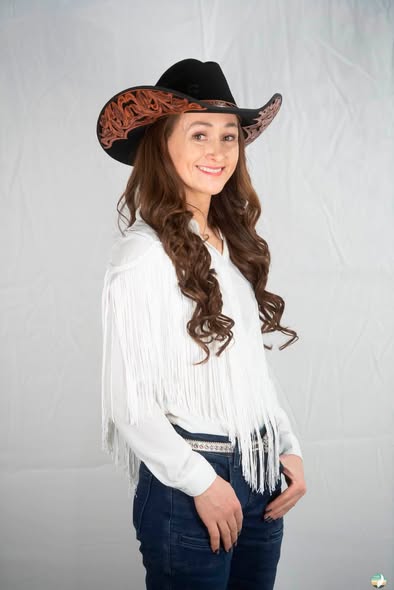
Cheyenne (Cheyanna) Closser Obituary-The heartbreaking news of a profound loss has rippled through the close-knit community of Markleville, Indiana, extending its shockwaves into both the national equestrian circuit and the legal profession. On July 29, 2026, the world tragically lost Cheyenne “Cheyanna” Closser, a brilliantly talented attorney, a former professional jockey, an accomplished barrel racer, and a dedicated business owner, at the incredibly young age of 29. The sudden and devastating nature of her passing has left a void in the hearts of her family, friends, and the countless individuals she impacted throughout her remarkably multifaceted life.
Cheyanna’s story is not just one of a life cut tragically short; it is a profound narrative of immense ambition, relentless discipline, and a deep-seated commitment to justice and community. When a community loses someone who was an active, vibrant pillar across so many different spheres of life—from the dusty arenas of horse racing tracks to the polished floors of the courtroom—the collective grief is immeasurable. People are left grappling with the agonizing reality of how quickly a bright light can be extinguished. This comprehensive exploration delves deep into the life she lived, the tragic circumstances of her untimely death, the complex legal frameworks surrounding such horrific accidents, and the broader philosophies of justice and accountability that defined her professional world. Through understanding her journey, the mechanics of the tragedy, and the legal foundations she respected, we can begin to fully appreciate the monumental legacy Cheyanna Closser leaves behind.
Who Was Cheyanna Closser? The Making of a Multidimensional Talent
To truly grasp the magnitude of the loss experienced by the Markleville community, one must understand the unique tapestry of Cheyanna Closser’s life. She was not a person defined by a single career or a solitary passion. Instead, she was a dynamic force of nature who successfully navigated and conquered seemingly disparate worlds. Born into a family with deep ties to the equestrian world—the daughter of former jockey Cindy Patrick and well-respected horse trainer Gary Patrick—Cheyanna was practically raised in the saddle. Her upbringing instilled in her a work ethic that most people take a lifetime to cultivate.
Deep Equestrian Roots: From Fairmount Park to Barrel Racing
Cheyanna’s entry into the professional equestrian world was as natural as breathing. The life of a jockey is notoriously demanding. It requires an extraordinary blend of physical fitness, mental toughness, acute tactical awareness, and an innate, unspoken bond with the animal. In 2013, she officially launched her riding career at Fairmount Park, stepping into a highly competitive and physically punishing arena. As Cheyanna Patrick, she became a regular, respected presence on the track. The track is an unforgiving teacher. It demands early mornings, grueling training sessions, strict dietary discipline, and the courage to pilot a thousand-pound animal at breakneck speeds while surrounded by other competitors.
But her love for horses extended far beyond the racetrack. Cheyanna was a deeply passionate barrel racer, a discipline that requires explosive speed, pinpoint precision, and seamless communication between horse and rider. Barrel racing is a sport where victory or defeat is measured in fractions of a second. The level of dedication required to train a horse to navigate a cloverleaf pattern with such agility translates directly to the dedication required to succeed in life. For Cheyanna, the arena was a place of joy, competition, and lifelong camaraderie. She built lasting friendships with fellow riders who admired not just her undeniable skill, but her impeccable sportsmanship and encouraging spirit. She possessed that rare quality of a fierce competitor who simultaneously elevated everyone around her. Whether she was working a young horse in a quiet rural pasture or competing under the bright lights of an arena, her respect for the animals and the sport was absolute.
The Rigorous Transition: From Professional Jockey to Dedicated Attorney
What sets Cheyanna’s story apart from many others is her remarkable transition from the physical demands of professional horse racing to the intense intellectual rigor of the legal field. Leaving a successful career in professional sports to pursue a law degree is an incredibly daunting endeavor. Law school is an intellectual crucible designed to reshape how a person thinks, analyzes, and argues. Yet, the very same discipline, focus, and resilience that made Cheyanna a successful jockey equipped her perfectly for the challenges of legal academia.
As an attorney, Cheyanna built a reputation defined by unimpeachable integrity, profound intelligence, and an unwavering commitment to serving her clients. The transition from the track to the courtroom makes perfect sense when viewed through the lens of advocacy. As a rider, you advocate for your horse, reading its signals and guiding it safely. As a lawyer, you advocate for your clients, navigating them through the dense, often intimidating labyrinth of the justice system. Colleagues deeply respected her thoughtful approach to complex legal issues. She did not just process cases; she invested herself in the human elements of the law, recognizing that behind every file was a person seeking justice, resolution, or a fair hearing. She approached her legal career with a genuine desire to make a positive, tangible difference in the lives of those she represented. Furthermore, her entrepreneurial spirit led her to become a successful business owner, balancing multiple demanding responsibilities with a grace and efficiency that continually inspired those around her.
Understanding the Markleville Crash: State Road 38 and State Road 109
The tragedy that claimed Cheyanna’s life unfolded on July 28, 2026, in a manner that highlights the sudden, devastating fragility of human existence. The crash occurred at the intersection of State Road 38 and State Road 109 in Madison County, Indiana—a rural crossroads that has now become a focal point of immense grief and intense scrutiny.
The Mechanics of the Collision and Emergency Response
According to investigators and authorities from the Markleville area, the mechanics of the crash represent one of the most terrifying scenarios on modern roadways. Cheyanna was traveling through the intersection when a commercial semi-truck allegedly failed to stop at a posted stop sign, colliding violently with her vehicle. The sheer physics involved in a collision between a standard passenger vehicle and a fully loaded commercial semi-truck are catastrophic. A semi-truck can weigh up to 80,000 pounds, whereas an average car weighs roughly 4,000 pounds. When a vehicle of that immense mass fails to stop, the transfer of kinetic energy upon impact is almost always fatal or severely life-altering for the occupants of the smaller vehicle.
Emergency responders were dispatched immediately, racing against the clock to provide life-saving interventions. The chaotic scene at the intersection required swift, coordinated action from local fire departments, paramedics, and law enforcement. Due to the critical nature of her injuries, a medical helicopter was summoned to the scene. Cheyanna was airlifted to a major trauma hospital in Indianapolis, an action reserved for only the most severe, life-threatening traumas. In Indianapolis, highly specialized medical teams worked tirelessly, deploying every available medical intervention to stabilize her condition and save her life. Tragically, despite the desperate and heroic efforts of the trauma surgeons and intensive care staff, the injuries sustained in the violent impact were too severe. She succumbed to her injuries the following day, July 29, 2026.
Rural Intersection Safety and Systemic Dangers
The intersection of State Road 38 and State Road 109 in Madison County is emblematic of the systemic dangers inherent in rural highway design. Across the American Midwest, two-lane state highways frequently intersect, often controlled only by two-way stop signs. These intersections are notoriously dangerous for several reasons. First, the speed limits on these rural stretches are typically high, meaning vehicles approach the intersections at 55 to 60 miles per hour. Second, sightlines can sometimes be obstructed by agricultural growth, rolling topography, or weather conditions. Third, driver fatigue or inattention—especially among long-haul commercial drivers navigating monotonous stretches of rural road—can lead to catastrophic failures in recognizing traffic control devices.
When a semi-truck runs a stop sign at a high-speed rural intersection, it is not merely a minor traffic infraction; it is a lethal event. The reaction time for a driver with the right-of-way, like Cheyanna, is virtually non-existent. There is no time to swerve, no time to brake, and nowhere to escape. The tragic loss of Cheyanna Closser has inevitably sparked urgent conversations within the Markleville and Madison County communities regarding the need for enhanced safety measures at this specific intersection and others like it. Whether it requires the installation of rumble strips, flashing red LED borders on stop signs, reduced speed zones approaching the intersection, or the complete redesign of the crossroads into a roundabout, the community is demanding answers and actionable solutions to prevent another family from enduring this unimaginable nightmare.
The Complexities of Trucking Accidents and Wrongful Death
Because Cheyanna dedicated her life to the law, it is necessary to examine the legal ramifications of the accident that took her life. When a commercial vehicle is involved in a fatal collision, the resulting legal investigation is exponentially more complex than a standard two-car fender bender. Trucking accidents exist at the intersection of state negligence laws and stringent federal regulations, creating a dense web of liability and accountability.
Federal Motor Carrier Safety Administration (FMCSA) Regulations
The commercial trucking industry is heavily regulated by the Federal Motor Carrier Safety Administration (FMCSA). These regulations exist specifically to prevent tragedies like the one in Markleville. Federal rules dictate almost every aspect of a commercial driver’s life and the maintenance of their vehicle. For instance, Hours of Service (HOS) regulations strictly limit how many consecutive hours a driver can operate a truck without resting. These rules are designed to combat driver fatigue, a leading cause of commercial vehicle crashes. If the driver who struck Cheyanna’s vehicle was operating beyond their legally permitted hours, it introduces a severe level of negligence.
Furthermore, FMCSA regulations mandate rigorous, regular maintenance of commercial vehicles. This includes frequent inspections of the braking systems, tires, and steering mechanisms. A fully loaded semi-truck traveling at highway speeds requires the length of nearly two football fields to come to a complete stop under ideal conditions. If the truck’s brakes were out of adjustment, excessively worn, or improperly maintained, the driver’s ability to stop at the State Road 109 intersection would have been severely compromised. Investigators will be poring over the truck’s electronic logging device (ELD), which acts much like a “black box” on an airplane. The ELD records the vehicle’s speed, braking data, engine RPMs, and the driver’s hours of service in the moments leading up to the crash. This digital footprint is critical in reconstructing the exact sequence of events.
Investigating Semi-Truck Negligence and Civil Liability
In the realm of civil law and wrongful death claims, a commercial trucking accident rarely limits liability to just the driver. Under the legal doctrine of respondeat superior, a trucking company can be held vicariously liable for the negligent actions of its employees performed during the scope of their employment. This means that if a driver runs a stop sign and causes a fatal crash, the corporation that hired them, trained them, and mandated their delivery schedule may also face immense legal scrutiny.
Moreover, investigations often uncover deeper, systemic negligence within the trucking company itself. Did the company have a history of hiring drivers with poor safety records? Did they turn a blind eye to falsified logbooks to ensure faster delivery times? Did they skimp on fleet maintenance to save on overhead costs? A thorough wrongful death investigation in a commercial crash leaves no stone unturned. Attorneys and accident reconstructionists will analyze everything from skid marks on State Road 38 to the corporate safety culture of the motor carrier. The pursuit of truth in these cases is arduous, but it is precisely the kind of rigorous, truth-seeking legal work that Cheyanna herself respected and embodied in her own practice.
Deep Dive: Legal Philosophy, Accountability, and the Justice System
Cheyanna Closser was an attorney—a sworn officer of the court who understood the profound weight of the law. To honor her professional life, we must engage in a deep-dive exploration of the legal philosophy that underscores the American justice system. The law is not just a collection of statutes and dry regulations; it is the philosophical bedrock of a functional society. It is the mechanism by which society enforces accountability, protects the vulnerable, and attempts to make whole those who have been wronged.
The Foundational Pillars of Modern American Jurisprudence
At its core, the American legal system is built on the adversarial process, a philosophical concept asserting that the truth is best discovered when two opposing sides present their strongest possible arguments before an impartial arbiter. Attorneys are the gladiators in this intellectual arena. They must possess an unyielding dedication to ethical standards, a deep understanding of precedent, and the courage to stand up against powerful interests. Legal philosophy teaches us that justice is not always perfect, but the process of seeking justice is sacred. Accountability is the ultimate goal. When an individual, a corporation, or a powerful entity causes harm—whether through a moment of careless negligence at a rural intersection or through years of systemic abuse of power—the law provides the sole civilized avenue for recourse.
Notable Legal Case Studies in Accountability: The Harvey Weinstein Appeals
To understand how high the stakes of legal accountability can be, and how complex the philosophy of justice is, lawyers often look to high-profile cases that test the limits of the system. Consider the labyrinthine legal saga of Harvey Weinstein, a case that fundamentally shifted the cultural and legal landscape regarding power dynamics, sexual violence, and accountability. The criminal convictions of Weinstein in New York and Los Angeles were initially hailed as monumental victories for justice. However, the legal philosophy of the United States demands that even the most reviled defendants are afforded a fair trial strictly according to the rules of evidence.
In 2024, the New York Court of Appeals overturned Weinstein’s 2020 rape conviction in a deeply polarizing 4-3 decision. The appellate court ruled that the trial judge had committed a critical error by allowing prosecutors to call women to testify about allegations that were not part of the actual criminal charges. This touches on a deeply ingrained legal philosophy known as the Molineux rule (or the rule against prior bad acts). The philosophy dictates that a person must be tried only for the specific crime they are charged with, not for being an inherently bad person with a history of bad behavior. Allowing “prior bad acts” can highly prejudice a jury.
While the overturning of the conviction was agonizing for the victims and caused public outrage, it highlights the razor-thin tightrope attorneys must walk. The justice system is built on rules designed to protect the innocent from wrongful conviction, and occasionally, those same rules provide avenues for the guilty to appeal. Weinstein remained incarcerated due to his separate conviction in California, but the New York reversal is a masterclass in the tension between public desire for immediate retribution and the cold, strict procedural philosophy of appellate law. It is exactly this kind of intense, high-stakes legal framework that attorneys study, debate, and navigate daily.
Defamation and the Limits of Public Influence: The Rudy Giuliani Case
Another profound area of legal philosophy that modern attorneys must navigate is the tension between the First Amendment right to free speech and the devastating harm caused by defamation. Accountability for public speech has never been more relevant than in the digital age. A glaring example of this legal philosophy in action is the civil defamation case against former New York City Mayor Rudy Giuliani.
Following the 2020 election, Giuliani repeatedly and falsely accused two Georgia election workers, Ruby Freeman and Shaye Moss, of election fraud. These baseless claims, amplified on national television and social media, led to the women receiving abhorrent death threats, racist harassment, and the complete destruction of their sense of safety and normal lives. The legal system stepped in to enforce accountability. In a massive civil defamation trial, a federal jury ordered Giuliani to pay an astonishing $148 million in damages to the two women.
This case is a cornerstone of modern legal philosophy regarding defamation. It proves that while speech is protected, weaponized lies that cause demonstrable, severe harm to private citizens carry catastrophic civil liability. Giuliani’s subsequent bankruptcy filing and the ongoing legal battles to enforce the judgment illustrate how complex the aftermath of civil litigation can be. It showcases the immense power of civil law to hold powerful figures accountable for the destruction they cause to ordinary people.
Connecting Macro Legal Precedents to Daily Legal Practice
Why discuss Weinstein or Giuliani in the context of a dedicated local attorney like Cheyanna Closser? Because these massive, headline-grabbing cases operate on the exact same foundational legal principles that guide everyday practice in Madison County, Indiana. The rules of evidence that govern a Hollywood mogul’s appeal are the same philosophical rules that dictate what evidence can be presented in a Markleville wrongful death lawsuit. The burden of proof required to win a $148 million defamation suit is built upon the same concepts of tort law used to prove a trucking company’s negligence.
Attorneys like Cheyanna are the localized stewards of this grand legal philosophy. They take the lofty ideals of justice, accountability, burden of proof, and evidentiary rules, and apply them to the real, immediate problems of their community members. Whether negotiating a business contract, advocating in a civil dispute, or guiding a family through a tragic loss, the attorney acts as the bridge between abstract legal philosophy and tangible human reality. Cheyanna’s dedication to this profession meant she understood the profound responsibility of wielding the law to protect, defend, and seek truth.
The Ripple Effect: Community Impact and Psychological Healing
The death of a 29-year-old with such immense potential and community presence does not happen in a vacuum. It triggers a profound psychological and emotional ripple effect that touches thousands of lives. The grief experienced by the Markleville community, the Indiana legal fraternity, and the nationwide equestrian family is complex and deeply layered.
The Markleville and Equestrian Community Response
In Markleville, Cheyanna was a familiar, vibrant face. Small towns are interconnected webs of relationships. The loss of a local business owner and beloved resident leaves a palpable silence on Main Street. The community response has been an outpouring of shared grief and mutual support. Neighbors, friends, and local business patrons have rallied together, sharing memories of her infectious smile, her relentless drive, and her willingness to always lend a helping hand.
In the equestrian world, the reaction has been equally heartbreaking. Barrel racing and horse racing are tight-knit subcultures. Competitors travel together, stall their horses next to each other, and share the unique highs and lows of equine sports. Social media platforms dedicated to the equestrian community have been flooded with tributes. Fellow riders have shared stories of Cheyanna’s kindness in the warm-up pen, her fierce competitiveness in the arena, and her unparalleled love for her horses. The tracks where she once rode as a jockey hold her memory in high esteem, remembering the brave young woman who fearlessly navigated the rail.
Navigating Sudden Loss and Digital Mourning
From a psychological standpoint, sudden, traumatic loss is incredibly difficult for a community to process. Unlike an anticipated passing following a long illness, a fatal car accident provides no time for goodbyes or mental preparation. The human brain struggles to reconcile the fact that a vibrant, healthy, dynamic person was here yesterday and is gone today. This type of traumatic grief often manifests as shock, disbelief, anger, and a profound sense of vulnerability among those left behind. It forces a community to confront the fragile, unpredictable nature of life.
In today’s digital era, the landscape of mourning has evolved. Grief is no longer confined to the physical space of a funeral home or a church. Digital mourning has allowed the disparate communities Cheyanna touched to converge in a shared virtual space. Facebook pages, Instagram feeds, and online legacy obituaries have become digital memorials. Friends share photos from law school graduations, videos of blistering fast barrel racing runs, and candid moments of joy. This collective digital grieving process is vital. It allows people scattered across the country to participate in the mourning rituals, providing a sense of solidarity and proving just how far Cheyanna’s influence reached. Reading the stories shared by colleagues and competitors helps the family see the magnificent scope of the life she built in just 29 years.
Honoring the Memory and Legacy of Cheyanna Closser
How does one appropriately honor a life as rich and dynamic as Cheyanna Closser’s? True legacy is not found in the tragic details of an accident, but in the enduring impact of a person’s character. Cheyanna’s legacy is written in the legal briefs she authored, the clients she defended, the horses she trained, and the countless friends she uplifted.
To honor her memory is to embrace the characteristics she embodied. It means approaching life with an unyielding work ethic. It means finding a passion—whether it is the law, equestrian sports, or small business—and pursuing it with relentless determination. It means acting with integrity, showing kindness to competitors, and advocating fiercely for what is right.
The Markleville community, alongside her family and friends, will undoubtedly find beautiful ways to memorialize her spirit. Whether through a memorial barrel race, a scholarship fund for aspiring law students, or advocacy for safer rural intersections, her name will continue to be a force for good. While the pain of her absence is a heavy burden for those who loved her, the brilliance of her 29 years provides a lasting, guiding light. Cheyanna Patrick Closser lived a life of extraordinary breadth and depth, and her spirit will forever gallop onward in the hearts of everyone she touched.
Frequently Asked Questions (FAQs)
Who was Cheyenne (Cheyanna) Closser? Cheyanna Closser, formerly Cheyanna Patrick, was a highly accomplished 29-year-old attorney, former professional jockey, dedicated barrel racer, and business owner. She began her equestrian career racing horses at Fairmount Park in 2013 before transitioning into the legal profession, where she was deeply respected for her integrity, intelligence, and advocacy. She was the beloved daughter of former jockey Cindy Patrick and trainer Gary Patrick.
How did Cheyanna Closser pass away? Tragically, Cheyanna passed away on July 29, 2026, due to severe injuries she sustained in a horrific motor vehicle accident the day prior. On July 28, she was driving through the intersection of State Road 38 and State Road 109 in Markleville, Madison County, Indiana, when a commercial semi-truck allegedly failed to stop at a stop sign and violently collided with her vehicle.
What happens when a semi-truck runs a stop sign and causes a fatal crash? When a commercial semi-truck causes a fatal accident, it triggers a massive, complex legal and law enforcement investigation. Authorities look into the driver’s actions, checking for impairment, fatigue, and distraction. Additionally, the trucking company faces intense scrutiny regarding Federal Motor Carrier Safety Administration (FMCSA) regulations. The victim’s family generally has the right to pursue a wrongful death civil lawsuit against the driver and the trucking corporation to enforce legal accountability and secure compensation for their unimaginable loss.
What kind of legal impact did Cheyanna have? As an attorney, Cheyanna was known for her fierce advocacy and commitment to justice. She transitioned the intense discipline she learned as a professional jockey into her legal studies and practice. She was respected by colleagues for her thoughtful approach to the law, representing the fundamental legal philosophy that everyone deserves dedicated, ethical, and intelligent representation.
How is the Markleville community responding to this tragedy? The Markleville community, along with the broader legal and equestrian communities, is completely devastated. There has been a massive outpouring of digital and physical support for her family. Friends, fellow riders, and legal colleagues have taken to social media and community gatherings to share memories, mourn the sudden loss, and celebrate the incredible, multifaceted life she lived. The accident has also likely sparked urgent conversations about improving the safety of rural intersections in Madison County to prevent future tragedies.