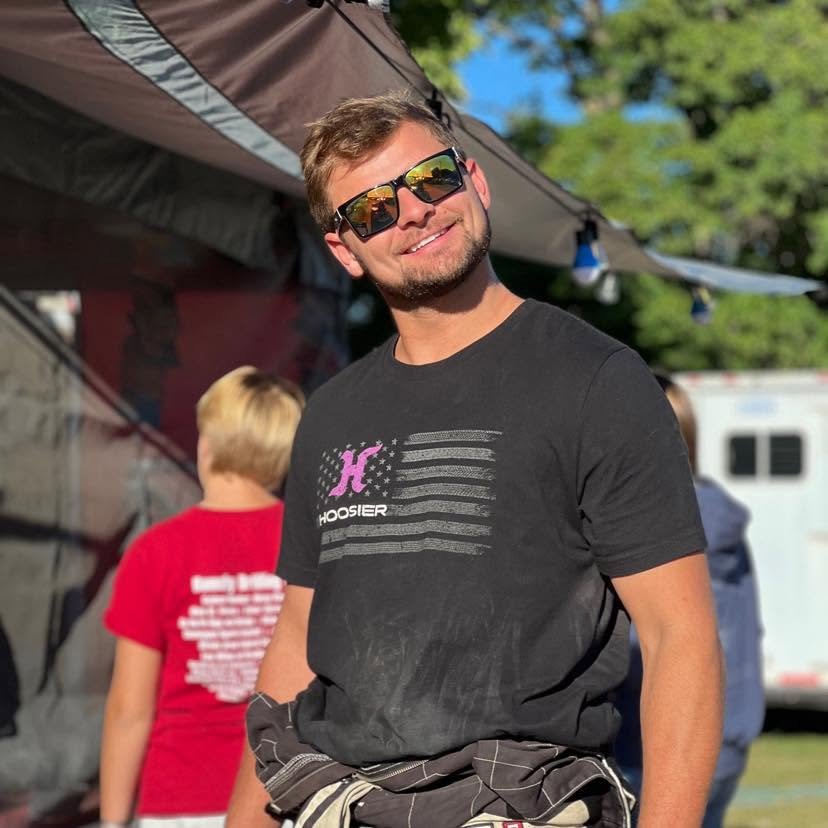
Scottie Ulman Tawas City MI Obituary-The world of short-track racing is a unique, close-knit universe where the smell of high-octane fuel and burning rubber forms the backdrop to lifelong friendships. In the heart of this vibrant culture, the Tawas City, Michigan, community is currently grappling with a profound and unexpected loss. The passing of Scottie Ulman on August 7, 2026, has sent shockwaves through the local sports community, leaving a void that words can barely capture. At just 26 years old, Scottie had already carved out a massive reputation as a big time racer, a fiercely loyal friend, and a beloved son and brother. When you search for the Scottie Ulman Tawas City MI obituary, you aren’t just looking for a list of dates and surviving relatives; you are searching for the story of a young man who lived life at full throttle, touching thousands of lives along the way.
The Tragic News That Shook a Tight-Knit Community
Tawas City, nestled gracefully along the shimmering shores of Lake Huron, is the kind of place where everyone knows their neighbors. When tragedy strikes here, it doesn’t just make the local news—it reverberates through the very soul of the town. The sudden passing of Scottie Ulman hit the community with the force of a physical blow. Families, local businesses, and especially the regional racing community immediately began sharing their grief, disbelief, and heartfelt condolences. The news spread like wildfire across social media, long before any official obituary was published, demonstrating just how deeply Scottie was embedded in the fabric of his hometown. This wasn’t just a loss for the Ulman family; it was a loss for the entire Tawas City ecosystem.
The Ripple Effect Across the Michigan Racing Scene
In Michigan, short-track racing is more than just a weekend hobby; it’s a way of life that spans generations. Scottie Ulman was a prominent fixture in this world. Whether he was turning laps at Whittemore Speedway, battling for position at Birch Run Speedway, or pushing the limits at Corrigan Oil Speedway, Scottie commanded respect. The ripple effect of his passing has been felt by track promoters, pit crews, fellow drivers, and the passionate fans who fill the grandstands every Saturday night. In motorsports, drivers put their lives on the line every time they strap into the cockpit, creating an unspoken brotherhood among competitors. When one of their own falls, the collective mourning is intense, raw, and deeply unifying.
The Making of a Big Time Racer: Scottie Ulman’s Motorsports Career
To truly understand the legacy of Scottie Ulman, you have to look at his relentless drive for competition. He wasn’t just someone who liked fast cars; he was a dedicated athlete who understood the mechanics, the strategy, and the raw courage required to be a big time racer.
Early Years, Tawas Blackhawks, and the Drive for Competition
Born right around the turn of the millennium, Scottie developed an affinity for sports and competition at an incredibly early age. Before he was dominating the dirt and asphalt tracks of Michigan, he was a standout athlete at Tawas Area High School. Graduating in 2018, Scottie was a proud member of the Tawas Blackhawks, leaving it all on the field in varsity football and pushing the limits on the ice in hockey. These early experiences in contact sports forged his competitive spirit. Football taught him discipline, teamwork, and the ability to perform under pressure. Hockey taught him agility, lightning-fast reflexes, and how to take a hit and keep moving forward. All of these attributes seamlessly transitioned into his motorsports career, which he officially kicked off around 2014 while still a teenager.
Dominating the Michigan Short-Track Scene
Once Scottie got behind the wheel, it became immediately apparent that he possessed a rare, natural talent. He didn’t just participate; he aimed to dominate. Competing across multiple divisions, including Modifieds, Limited Late Models, and Street Stocks, his versatility was nothing short of astounding.
The Whittemore Speedway and Birch Run Triumphs
Whittemore Speedway, proudly known as Michigan’s oldest operating racetrack, became one of Scottie’s primary proving grounds. It was here that he truly earned his moniker as a big time racer. Driving the No. 41 car, Scottie was a fan favorite. Just weeks before his tragic passing, in July 2026, he drove to an impressive fourth-place finish in a grueling 75-lap Modifieds feature at Whittemore. He also made his mark at Birch Run Speedway, navigating the tricky corners and fierce competition with the poise of a seasoned veteran. In 2020, his hard work culminated in a massive achievement: winning the Street Stock championship. He also recorded multiple victories in the highly competitive Lead Sled division, proving that no matter what kind of vehicle you put him in, he was going to find a way to the front of the pack.
The Mechanics of Modifieds and Street Stock Racing
For those unfamiliar with the nuances of short-track racing, the transition between Street Stocks and Modifieds is incredibly demanding. Street Stock cars are generally based on factory passenger cars with heavy modifications for safety and performance, requiring a driver who can muscle a heavy vehicle around a tight track. Modifieds, on the other hand, are purpose-built, open-wheel race cars that are incredibly light and violently fast. They require a delicate touch, immense concentration, and a profound understanding of chassis dynamics. Scottie’s ability to seamlessly jump between these vastly different classes of race cars and win in both speaks volumes about his profound mechanical sympathy and innate driving abilities.
The Brothers Ulman Team and the Grueling I-500 Snowmobile Race
As if racing cars wasn’t enough to satisfy his need for speed, Scottie also threw himself into the incredibly dangerous and physically demanding world of snowmobile endurance racing. Teaming up with his older brother, Steven, they formed the “Brothers Ulman” team. Their crown jewel of competition was the International 500 (I-500) Snowmobile Race in Sault Ste. Marie. For the uninitiated, the I-500 is often referred to as the “Daytona 500 of Snowmobile Racing.” It is a punishing, 500-mile endurance race held on a one-mile ice oval. Riders endure freezing temperatures, zero visibility from snow dust, and immense physical fatigue as they wrestle high-powered sleds around slick corners for hours on end. The fact that Scottie competed in this event highlights a level of grit, stamina, and fearlessness that few human beings possess.
The Community Impact: A Legacy Built on Genuine Connection
A person’s legacy is rarely defined solely by the trophies they collect; it is defined by the lives they touch. In this regard, Scottie Ulman was a champion long before he ever crossed a finish line.
Beyond the Track: Friendship, MIRA, and Camaraderie
Scottie was a deeply valued member of the MIRA (Midwest International Racing Association) family. Through MIRA, he wasn’t just a competitor; he was a fixture of the community. People who interacted with Scottie noted his infectious smile, his willingness to lend a hand to a struggling pit crew, and his genuine kindness. In the pits, where rivalries can often boil over into heated arguments, Scottie was known as a peacemaker and a fiercely loyal friend. His connections extended far beyond the confines of his own garage. He formed meaningful relationships that bridged the gap between fierce on-track competition and deep off-track brotherhood.
Grassroots Support and the Outpouring of Grief
Following the news of his death on August 7, 2026, the outpouring of grief from the Tawas City community was monumental. Tributes flooded in, with one simple but powerful message echoing across social media: “Godspeed, Scottie.” The community rallied around the Ulman family, offering prayers, hot meals, and a shoulder to cry on. In small-town America, grief is a collective experience. The loss of a young, vibrant life like Scottie’s reminds everyone of the fragility of existence, prompting a beautiful but tragic unification of the local populace.
The Evolution of Media Presence in Public Tragedies and Legacies
When examining the Scottie Ulman Tawas City MI obituary, it is fascinating to step back and look at how media presence shapes our understanding of a person’s life and legacy. The way we mourn, remember, and document lives has undergone a massive transformation in the digital age.
How the Digital Age Shapes Modern Obituaries and Mourning
A few decades ago, an obituary was a few column inches in a local newspaper, strictly outlining a person’s birth, career, and surviving family. Today, an obituary is a dynamic, living digital tribute. When someone like Scottie passes, their digital footprint becomes a virtual memorial. GoFundMe pages are set up within hours, Facebook and Instagram become digital gathering places for mourners, and racing forums light up with tribute threads. The digital age allows a person’s legacy to be crowdsourced. Instead of a single writer summarizing a life, hundreds of friends, fans, and competitors contribute their own stories, painting a rich, multi-dimensional portrait of the deceased.
The Media Machine: Grassroots Heroes vs. High-Profile Figures
This organic, love-filled digital memorialization stands in stark contrast to how the media machine handles the legacies of high-profile, controversial public figures. Scottie Ulman’s legacy is what we call a “grassroots legacy.” It is built on actual, localized human connection. He was loved because he was a genuinely good person who did great things in his local community. On the other end of the spectrum, you have manufactured media legacies—reputations built by PR firms, protected by aggressive litigation, and sustained by national media narratives. When we look at how legacies are constructed and ultimately destroyed on the national stage, we uncover a fascinating intersection of law, public relations, and legal philosophy.
Legal Philosophy: The Intersection of Legacy, Law, and Public Life
To fully appreciate the pure, untarnished memory of a community hero like Scottie Ulman, it is incredibly instructive to examine the legal philosophies that govern public reputation and the often messy downfalls of national figures. How does the law protect a legacy, and how does it dismantle one?
Defamation, Public Reputation, and Posthumous Rights
In the realm of legal philosophy, the concept of “reputation” is fiercely debated. Is your reputation your property? Under American law, defamation (libel and slander) allows an individual to sue if someone makes false statements that damage their reputation. However, the law distinguishes between private individuals and public figures (stemming from the landmark Supreme Court case New York Times Co. v. Sullivan). Public figures must prove “actual malice”—that the publisher knew the statement was false or acted with reckless disregard for the truth. Interestingly, under current legal doctrine, you cannot defame the dead. Once a person passes away, their legal right to protect their reputation via defamation lawsuits generally dies with them. This places a massive moral responsibility on the media and the community to report on obituaries, like Scottie Ulman’s, with accuracy, dignity, and respect.
Notable Cases in Public Life and Legal Scrutiny
When a grassroots legacy is compared to a high-profile national legacy, the differences in legal scrutiny are staggering. Let’s examine two of the most heavily documented case studies in modern legal history regarding the collapse of a public legacy: Harvey Weinstein and Rudy Giuliani. These cases highlight the legal philosophy of accountability and the limits of media manipulation.
The Harvey Weinstein Case: The Collapse of a Media Legacy Under Legal Scrutiny
For decades, Harvey Weinstein was a titan of the film industry. His legacy was heavily protected by a massive media presence, non-disclosure agreements (NDAs), and a team of aggressive lawyers who weaponized the legal system to silence accusers. However, legal philosophy shifted. The eventual criminal trials in New York and Los Angeles dismantled his manufactured legacy piece by piece.
In legal circles, the Weinstein trials brought the use of “Molineux witnesses” (or prior bad acts witnesses) to the forefront of legal philosophical debate. To what extent should a jury hear about uncharged crimes to establish a pattern of behavior? In 2024, the New York Court of Appeals actually overturned his 2020 rape conviction, arguing that the trial judge prejudiced Weinstein by allowing too many women to testify about allegations that were not part of the underlying criminal charges. This sparked a massive debate on the balance between a defendant’s right to a fair trial and the rights of victims to show a systemic pattern of abuse. Despite the New York reversal, Weinstein’s Los Angeles conviction kept him behind bars. The total collapse of his legacy demonstrates that a media presence built on intimidation and legal loopholes will ultimately crumble under the sustained weight of the judicial process.
Rudy Giuliani: The Legal Philosophy of Public Downfalls and Defamation
Another glaring example of a legacy destroyed by legal scrutiny is Rudy Giuliani. Once universally heralded as “America’s Mayor” following the tragic events of 9/11, Giuliani’s legacy was bulletproof. However, his subsequent involvement in spreading unfounded claims regarding the 2020 election led to one of the most spectacular reputational collapses in modern history.
From a legal philosophy standpoint, Giuliani’s downfall is a masterclass in the limits of First Amendment protections for attorneys. Lawyers are officers of the court, bound by strict ethical guidelines regarding truthfulness. When Giuliani repeatedly made false claims about Georgia election workers Ruby Freeman and Shaye Moss, he crossed the line from protected political speech into defamation per se. The result was a staggering $148 million defamation judgment against him, followed by bankruptcy filings, and eventually his disbarment in New York in July 2024. The legal philosophy here is clear: weaponizing your media presence to destroy the lives of private citizens will result in the total forfeiture of your own legacy and financial ruin.
Comparing the Untarnished Legacy of a Local Hero with Controversial Public Figures
Why bring up Weinstein and Giuliani in an article honoring a young racer from Tawas City? It is the ultimate study in contrast. The legacies of Weinstein and Giuliani were propped up by millions of dollars, PR spin, and aggressive legal posturing, yet they ended in absolute disgrace. Scottie Ulman, on the other hand, didn’t need PR spin. He didn’t need lawyers to protect his reputation. His legacy was built organically on Saturday nights at the dirt track, through handshakes in the pit lane, and through the blood, sweat, and tears of genuine athletic competition. It proves that the most enduring and respected legacies are those built on authenticity and community, completely removed from the toxic, highly litigated sphere of national public life.
Motorsports and Legal Philosophy: Understanding Liability and Risk
Returning to the world of Scottie Ulman, it’s vital to explore the legal framework that surrounds the incredibly dangerous sport he dedicated his life to. Motorsports operates on the razor’s edge of safety and danger, bringing up fascinating concepts in tort law and legal philosophy.
The Doctrine of Assumption of Risk in High-Speed Sports
When a driver like Scottie straps into a 600-horsepower Modified car and goes three-wide into a corner at 100 miles per hour, they are engaging in what the law calls “Assumption of Risk” (the legal maxim volenti non fit injuria—to a willing person, injury is not done). In legal philosophy, this doctrine asserts that if an individual voluntarily engages in an inherently dangerous activity with full knowledge of the risks involved, they cannot hold another party liable if they are injured.
In motorsports, this is typically handled through “express assumption of risk,” which involves signing liability waivers before entering the pit area. Every driver, mechanic, and even the media personnel must sign these waivers. However, the legal debate is always evolving. Can a driver assume the risk of gross negligence by the track promoter? For instance, if a track owner knowingly leaves a massive hole in a retaining wall and a driver hits it, standard waivers often do not protect against willful or wanton misconduct.
The Legal Framework of Racetrack Safety and Negligence
The legal responsibilities of a racetrack, such as Whittemore Speedway or Birch Run, are extensive. They owe a duty of care to their spectators to ensure grandstands are safe from flying debris (often utilizing massive catch fences). They owe a duty of care to the drivers to provide adequate safety personnel, fire response teams, and properly maintained racing surfaces. Over the decades, the legal pressure to avoid massive negligence lawsuits has driven innovation in track safety. The introduction of SAFER (Steel and Foam Energy Reduction) barriers, HANS (Head and Neck Support) devices, and stringent roll-cage regulations in street stocks and modifieds were all born out of a desire to protect human life and mitigate legal liability.
Comprehensive Case Studies in Sports and Legal Legacies
To understand how deeply the law impacts sports, we can look at broader case studies that have forever altered the landscape of athletic competition and public memory.
Case Study 1: The Evolution of Racetrack Liability Laws
Perhaps the most famous case study in motorsports history is the tragic death of Dale Earnhardt at the 2001 Daytona 500. While this was at the top tier of NASCAR, the legal and safety ramifications trickled down to every short track in America, including those in Michigan where Scottie raced. Earnhardt’s death sparked intense legal scrutiny regarding seatbelt manufacturing, the necessity of head-and-neck restraints, and track barrier construction. Although Earnhardt’s family did not pursue aggressive litigation against NASCAR, the implicit threat of massive wrongful death lawsuits in the future forced the entire industry to revolutionize its safety standards. Today, a 26-year-old racer in Tawas City benefits directly from the legal and safety precedents set by the tragedies of the past.
Case Study 2: Media Management in Times of Public Crisis
When a tragedy occurs in the sports world, how the media is managed legally is crucial. When a fatal or near-fatal crash happens at a local track, law enforcement must conduct an investigation to rule out foul play or gross negligence. During this time, the release of information is highly controlled. This is why, in the immediate aftermath of Scottie Ulman’s passing, initial reports were careful and unverified. Legal protocols dictate that official confirmation of cause of death must come through coroners, medical examiners, and immediate family members. This cautious approach prevents the spread of misinformation and protects the family’s privacy rights during their most vulnerable moments.
Honoring Scottie Ulman: Final Farewells and Memorials
As the legal and media landscapes continue to churn in the background, the primary focus for Tawas City remains solely on honoring the life of a young man taken far too soon.
How Tawas City is Paying Tribute to a Hometown Hero
The community response has been nothing short of beautiful. Local businesses in Tawas City have updated their marquees to feature tributes to Scottie. Memorial funds are likely being organized to help the Ulman family cover unexpected funeral expenses and to support the causes Scottie cared about. Fellow hockey and football alumni from the Tawas Blackhawks have shared countless stories of his locker room leadership and his infectious laugh.
The Future of the No. 41 Car and His Enduring Spirit
In motorsports, the race car itself often becomes a symbol of the driver. The No. 41 Modified car will forever be associated with Scottie Ulman. It is common practice in the racing community for competitors to run memorial decals—often featuring the deceased driver’s number and a halo or checkered flag—on their own cars for the remainder of the season. Tracks like Whittemore Speedway will likely hold a moment of silence or run a “missing man formation” pace lap in his honor. While Scottie may no longer be physically behind the wheel, his spirit will ride along with every driver who navigates the dirt and asphalt of Michigan’s short tracks.
Conclusion: The Enduring Memory of a True Competitor
In an era where public legacies are constantly under a microscope, ripped apart by legal battles, and tarnished by media scandals, the legacy of Scottie Ulman remains brilliantly pure. He was a 26-year-old big time racer from Tawas City, Michigan, who loved his family, cherished his friends, and possessed a burning desire to go fast. His passing is a devastating blow to the motorsports community and the town that raised him. As we navigate the complex intersection of public memory, media presence, and legal philosophies, we realize that the most powerful legacies aren’t the ones debated in a courtroom; they are the ones etched into the hearts of a community. Rest in peace, Scottie Ulman. The checkered flag has flown on a life beautifully lived, but your memory will race on forever.
Frequently Asked Questions (FAQ)
Who was Scottie Ulman? Scottie Ulman was a 26-year-old resident of Tawas City, Michigan. He was a well-known local athlete, a 2018 graduate of Tawas Area High School where he played football and hockey, and a highly respected short-track racing driver.
What kind of racing did Scottie Ulman do? Scottie was an incredibly versatile driver. He competed in Modifieds, Limited Late Models, and Street Stocks at tracks like Whittemore Speedway, Birch Run Speedway, and Corrigan Oil Speedway. He was the 2020 Street Stock Champion and also competed in the grueling I-500 snowmobile endurance race with his brother Steven.
When did Scottie Ulman pass away? Scottie Ulman unexpectedly passed away on August 7, 2026.
How is the Tawas City community responding to his passing? The community has responded with a massive outpouring of grief, love, and support. Fellow racers, the MIRA community, former classmates, and local residents have taken to social media and community gatherings to offer condolences, share memories, and support the Ulman family during this tragic time.
What is the I-500 snowmobile race that Scottie competed in? The International 500 is a legendary, grueling 500-mile endurance snowmobile race held annually on a one-mile ice oval in Sault Ste. Marie, Michigan. It tests the extreme physical and mental limits of the riders and their machines.
How does the law handle liability in dangerous sports like short-track racing? Motorsports liability is largely governed by the legal doctrine of “Assumption of Risk.” Drivers sign extensive waivers acknowledging the inherent dangers of racing. However, tracks still owe a duty of care to maintain safe facilities and prevent acts of gross negligence that could harm drivers or spectators.
Why are public legacies like those of famous politicians different from local heroes? Local heroes like Scottie Ulman build grassroots legacies based on genuine community interactions, sportsmanship, and authentic relationships. In contrast, high-profile national figures often rely on manufactured media presence and aggressive legal strategies to maintain their reputations, which can collapse dramatically under legal scrutiny, as seen in cases involving defamation or criminal trials.