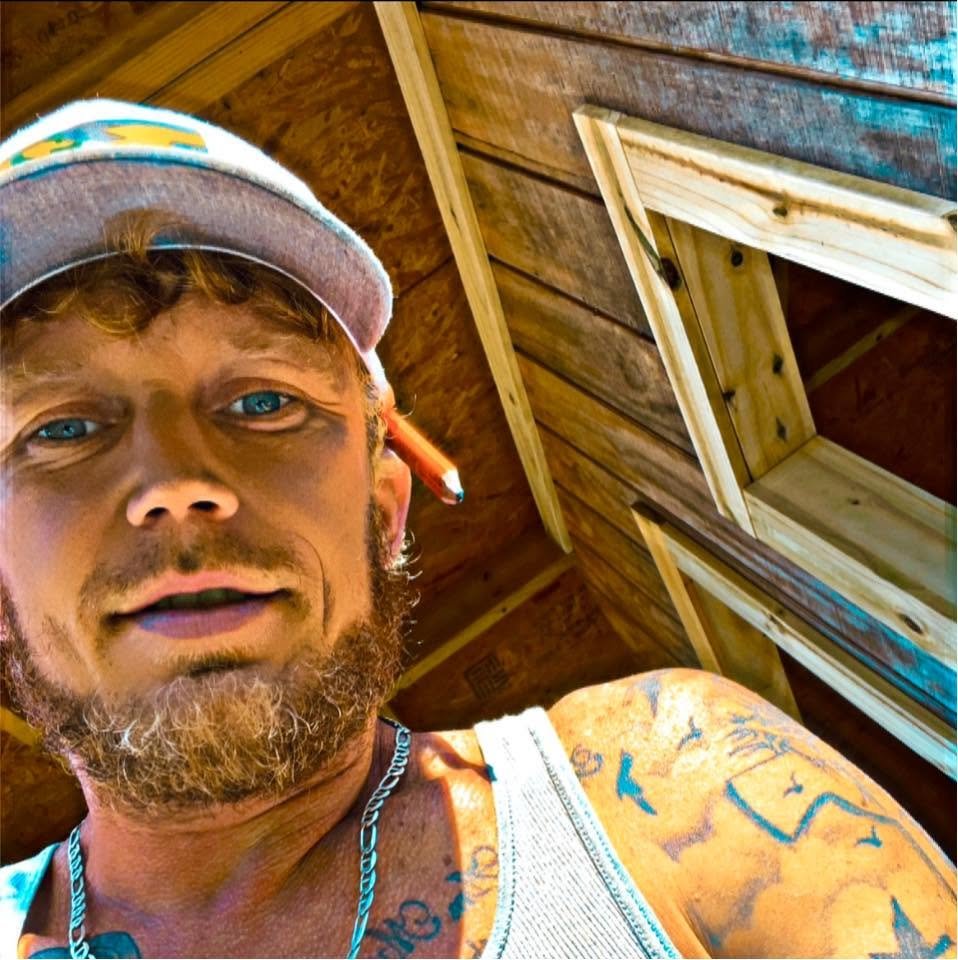
When a community loses a bright, young light, the shockwaves are felt far beyond the immediate family. The tragic news surrounding the Quinton Kuykendall obituary in Bronson, FL, after he died in an accident, has left the towns of Bronson and Newberry grappling with an unimaginable reality. Quinton wasn’t just a name in a local directory; he was a beloved Newberry football standout, a friend, a son, and a pillar of youthful energy that brought people together. Losing someone with such a promising future in a sudden traffic collision on State Road 24 changes a community forever. It forces us to confront our own mortality, re-evaluate our road safety, and lean on one another in times of profound darkness.
This comprehensive tribute and analysis goes far beyond the standard details of an obituary. We are going to explore who Quinton was, the profound impact he had on the local football scene, and how small towns process such staggering grief. But we’re also going to pull back the curtain on the broader implications of fatal accidents. From the exhaustive procedures of crash investigations and the history of SR 24, to deep dives into the legal philosophy of wrongful death—even drawing parallels to how high-profile legal battles shape our understanding of liability and justice—this article aims to provide a complete, multifaceted look at what happens when tragedy strikes.
The Tragic Loss of Quinton Kuykendall in Bronson, FL
The reality of a fatal accident is always jarring. One moment, life is proceeding at its normal, comforting pace; the next, everything is fractured. For the residents of Levy and Alachua counties, the news of Quinton Kuykendall’s passing was a sudden, heartbreaking jolt. The accident, which took place near Bronson, Florida, has become a focal point of collective mourning and urgent questions. How could this happen? What went wrong on that stretch of road? To truly understand the gravity of this loss, we have to look closely at the circumstances of the crash and the immediate, frantic moments that followed.
Details of the Heartbreaking SR 24 Crash
State Road 24 is a vital artery that connects the rural, heavily forested areas of Levy County to the bustling hubs of Alachua County. It is a road traveled by thousands of commuters, students, and families every single day. Unfortunately, its winding stretches and sometimes limited visibility have made it the site of numerous traffic incidents over the years. The crash that claimed the life of Quinton Kuykendall occurred on a fateful stretch of this very highway.
While the exact kinetic details of the collision are part of an ongoing investigation, the basic facts paint a grim picture. Vehicles traveling at highway speeds carry immense kinetic energy, and when an interruption in the flow of traffic occurs—whether due to an unexpected obstacle, a sudden maneuver, or environmental factors—the results are often catastrophic. Reports indicate that the collision was severe, instantly halting traffic and sending a wave of panic through those who witnessed it. Metal crumpled, glass shattered, and in an instant, a young man’s incredibly promising life was cut short. The physics of highway crashes are unforgiving. Even in modern vehicles equipped with advanced safety features, the human body can only withstand so much force.
When a crash of this magnitude happens, the debris field can stretch for hundreds of yards. Skid marks on the asphalt tell a silent, desperate story of the final seconds before impact. For the investigators who arrived on the scene, piecing together the trajectory of the vehicles is a meticulous, heartbreaking task. They have to account for the weather conditions, the time of day, the angle of the sun, and the exact condition of the roadway. Every single variable is a piece of the puzzle that will eventually explain how the Newberry community lost one of its brightest stars.
Immediate Aftermath and Emergency Response
The moments immediately following a major traffic collision are chaotic and deeply traumatic. As the dust settled on SR 24, bystanders and other motorists were the first to react. Many pulled over, dialing 911 with shaking hands, while others rushed toward the wreckage in a desperate attempt to offer aid. This immediate, human instinct to help is a testament to the goodness in people, but they were facing a situation that required professional medical intervention.
Within minutes, the wail of sirens cut through the quiet rural air. Emergency Medical Services (EMS), local fire departments, and officers from the Florida Highway Patrol (FHP) converged on the scene. First responders are trained to handle chaos. They operate with a terrifying efficiency, securing the perimeter to prevent secondary accidents, deploying heavy equipment like the Jaws of Life to extricate victims, and administering life-saving triage right there on the asphalt.
Despite the rapid response and the exhaustive, heroic efforts of the paramedics, Quinton’s injuries were simply too severe. The transition from a frantic rescue mission to a somber recovery operation is one of the heaviest burdens a first responder has to bear. The flashing lights of the ambulances and police cruisers illuminated the dark reality that Quinton Kuykendall was gone. The road was shut down for hours, creating a physical blockade that mirrored the emotional standstill the community was about to experience.
Remembering Quinton: The Newberry Football Standout
To reduce Quinton Kuykendall’s life to the circumstances of his death would be a profound disservice to his memory. Quinton was a force of nature, a young man whose presence filled a room and dominated a football field. In the town of Newberry, high school football isn’t just an extracurricular activity; it’s a way of life. It’s the glue that holds the community together on Friday nights, and Quinton was right at the center of that tradition.
Early Life and an Undeniable Passion for the Game
From a very young age, Quinton exhibited a natural magnetism and an incredible reserve of physical energy. Friends and family recall a boy who was always moving, always competing, and always smiling. His introduction to football happened on the dusty pop-warner fields, where oversized helmets and oversized jerseys couldn’t hide his raw, unbridled talent. He didn’t just love playing the game; he loved the strategy, the camaraderie, and the discipline it required.
Growing up in the tight-knit communities of North Central Florida meant that Quinton’s athletic journey was a shared experience. Parents, coaches, and local business owners watched him develop from a fast kid on the playground into a formidable athlete. Football taught him resilience. It taught him how to take a hit, get back up, and line up for the next play. That mindset bled into his everyday life. He was known as someone who would stick up for his friends, someone who worked hard in the classroom, and someone who respected the sacrifices his family made to support his dreams.
His passion for the game was infectious. When Quinton talked about football, his eyes lit up. He studied game film like a scholar studying ancient texts, always looking for a way to improve his footwork, his anticipation, and his overall understanding of the sport. This wasn’t just a hobby; it was a calling. And as he entered Newberry High School, that calling propelled him onto a much larger stage.
Athletic Achievements and Locker Room Leadership
By the time Quinton suited up for the Newberry High varsity team, he was already a known commodity. But high school football under the Friday night lights is a different beast entirely. The pressure is immense, the competition is fierce, and the expectations from the town are sky-high. Quinton didn’t just meet these expectations; he shattered them.
On the field, he was a standout. Whether he was making a crucial tackle, breaking away for a long run, or rallying his teammates during a tough quarter, his athletic achievements were a frequent topic of conversation in the local diners and hardware stores. He possessed a rare combination of speed, power, and instinct. College scouts were undoubtedly taking notice of his highlight reels.
But his true value to the Newberry football program wasn’t just in his statistics; it was in his leadership. The locker room is a sacred space for a sports team. It’s where culture is built and where boys learn to become men. Quinton was a natural leader. He didn’t need to yell to be heard. He led by example, arriving early for practice, pushing through grueling summer conditioning drills without complaint, and taking younger players under his wing. When the team was down at halftime, it was often Quinton’s voice that cut through the frustration, reminding them of who they were and what they were capable of. His loss leaves a void in that locker room that will never truly be filled.
Community Impact: How Newberry and Bronson Mourn Together
The towns of Bronson and Newberry are relatively small, geographically close, and deeply interconnected. In places like this, degrees of separation are practically non-existent. When one family bleeds, the whole town reaches for a bandage. The news of Quinton’s fatal accident didn’t just make headlines; it broke hearts in living rooms, classrooms, and local businesses across the region.
Vigils, Memorials, and Grassroots Tributes
The immediate response to the tragedy was a spontaneous outpouring of love and grief. Almost instinctively, students and community members began gathering. The football field, the place where Quinton felt most alive, became a focal point for mourning. Candlelight vigils were organized through social media and word of mouth, bringing out hundreds of people who stood shoulder-to-shoulder in the evening chill.
These memorials are deeply visceral experiences. The soft glow of candlelight illuminating tear-streaked faces, the hushed whispers of shared memories, and the sight of Quinton’s jersey draped over a fence post all serve as a collective release valve for a community in shock. Flowers, handwritten notes, photographs, and football memorabilia began piling up at makeshift memorials, both at the high school and near the site of the crash on SR 24.
Local businesses changed their marquees from advertising daily specials to displaying messages of condolence: “Rest in Peace, Quinton,” “Newberry Strong,” “Our Hearts are with the Kuykendall Family.” Grassroots fundraising efforts sprang up overnight, with car washes, bake sales, and online crowdfunding campaigns designed to alleviate the financial burden of funeral costs for the family. This is the beautiful, heartbreaking reality of small-town life—when tragedy strikes, the safety net is woven from the hands of neighbors.
The Unseen Ripple Effect of Grief in Small Towns
While the public vigils and fundraisers are highly visible, there is an unseen ripple effect of grief that permeates every corner of the community. Teachers have to look at an empty desk and somehow find the composure to teach a lesson. Teammates have to lace up their cleats and step onto a field that suddenly feels hollow. For the youth in Newberry and Bronson, this might be their first real confrontation with sudden mortality.
Psychologists note that the death of a peer can be incredibly destabilizing for teenagers. Adolescence is a time of perceived invincibility; the idea that a strong, healthy athlete could just vanish in an afternoon shatters that illusion. School counselors were brought in to offer support, creating safe spaces for students to cry, talk, or just sit in silence. The grief doesn’t follow a straight line. It comes in waves—sometimes triggered by a song on the radio, a specific play during a football game, or just the changing of the seasons.
The adults in the community also carry a heavy burden. Parents hold their own children a little tighter, double-checking seatbelts and strictly enforcing curfews. The anxiety surrounding young drivers on rural roads spikes, fundamentally altering the baseline of comfort for families in the area.
The Legal Philosophy of Wrongful Death and Accident Liability
When the immediate shock of a fatal accident begins to recede, a new, incredibly complex phase often begins: the search for answers, accountability, and justice. The legal philosophy surrounding traffic fatalities is a dense web of statutes, precedents, and moral questions. It requires us to examine how society places a value on human life, how we define negligence, and how the courts attempt to make a grieving family “whole” again, even when that is physically and emotionally impossible.
Understanding Civil Liability Versus Criminal Negligence
In the aftermath of a fatal crash, there are generally two distinct legal avenues that might be pursued: criminal and civil. Understanding the difference is crucial to understanding the legal philosophy of accident liability.
Criminal negligence involves a driver acting with a reckless disregard for the safety of others. If a police investigation determines that a driver was heavily intoxicated, street racing, or fleeing law enforcement, the state may press criminal charges, such as vehicular manslaughter or DUI manslaughter. The burden of proof in criminal court is incredibly high: “beyond a reasonable doubt.” The philosophy here is punitive and protective; the state is seeking to punish the offender and remove a danger from society.
Civil liability, on the other hand, deals with wrongful death claims filed by the surviving family members against the at-fault party. The burden of proof here is lower: a “preponderance of the evidence.” In civil court, the legal philosophy shifts from punishment to compensation. It is rooted in Tort Law, which dictates that if someone breaches a duty of care owed to another, and that breach causes harm, the injured party must be compensated.
But how does a court compensate a family for the loss of a son? You can’t write a check that brings someone back. Therefore, the legal system relies on a cold, calculated translation of human loss into financial damages. This includes tangible costs like medical bills and funeral expenses, but also deeply intangible concepts like “loss of companionship,” “mental pain and suffering,” and the destruction of future earning capacity. It is a flawed system, but it is the only mechanism the justice system has to balance the scales.
High-Profile Precedents: Shaping the Modern Legal Landscape
To fully grasp how civil liability and public accountability function in modern America, it helps to look at high-profile cases that have fundamentally altered the legal landscape. While a traffic accident in Florida is vastly different in nature from celebrity scandals, the underlying legal mechanisms—burden of proof, reputational damage, financial restitution, and public narrative—are deeply intertwined.
The Intersection of Media and Justice: The Harvey Weinstein Phenomenon
Consider the colossal legal earthquake surrounding Harvey Weinstein. On the surface, his crimes have nothing to do with a rural traffic fatality. However, the Weinstein saga completely revolutionized how society and the legal system view civil liability, non-disclosure agreements, and the shifting of the burden of proof in the court of public opinion.
For decades, Weinstein used his immense financial power to settle civil claims privately, utilizing ironclad NDAs to silence victims. This represented a dark side of civil torts, where money could essentially purchase immunity from public accountability. When the #MeToo movement broke the dam, it wasn’t just a criminal reckoning; it was a total restructuring of civil liability philosophy. The public demanded that civil settlements could no longer be used as tools of subjugation.
In the context of personal injury and wrongful death, the “Weinstein effect” has made courts and the public highly suspicious of corporate cover-ups or wealthy insurance companies bullying victims into quiet settlements. Just as Weinstein’s victims fought to have their suffering acknowledged publicly, families of accident victims today are increasingly rejecting low-ball, confidential settlements in favor of public trials that force trucking companies, negligent municipalities, or reckless drivers to admit their fault on the public record. The demand for transparency over quiet cash is a direct evolution of this legal era.
Defamation, Damages, and Accountability: Lessons from Rudy Giuliani
Another fascinating lens through which to view civil damages is the recent defamation judgment against Rudy Giuliani. Giuliani was ordered to pay a staggering $148 million to two Georgia election workers after he repeatedly broadcast false claims about them. This case serves as a masterclass in how the civil justice system calculates and awards punitive damages.
In tort law, compensatory damages are meant to reimburse a victim for what they lost. Punitive damages, however, are designed to punish the defendant for incredibly egregious behavior and deter others from doing the same. Giuliani’s actions destroyed the reputations and peace of mind of two innocent people, and the jury essentially decided to bankrupt him as a punishment.
How does this relate to fatal auto accidents? If an investigation reveals that a commercial trucking company knowingly forced their driver to stay on the road for 20 hours straight without sleep, and that driver killed someone, a jury might look at that corporate greed the same way the Giuliani jury looked at defamation. They will award punitive damages not just to compensate the family, but to send a financially devastating message to the entire industry that reckless disregard for human life will not be tolerated. Both the Giuliani case and extreme wrongful death cases show that civil courts are the ultimate arena for hitting wrongdoers where it hurts the most: their wallets.
Applying Broad Legal Concepts to Florida Traffic Fatalities
Bringing this back to State Road 24, if negligence played a role in the crash that took Quinton Kuykendall’s life, Florida’s specific legal statutes will govern the outcome. Florida operates under a “comparative negligence” system. This means that if a court finds that multiple parties share the blame for an accident, the financial liability is distributed according to their percentage of fault.
For the grieving family, navigating this legal labyrinth requires specialized attorneys who understand the physics of the crash and the complex precedents of Florida tort law. These lawyers become the voice of the victim, ensuring that insurance companies don’t use aggressive tactics to minimize the value of the life lost.
The Anatomy of a Fatal Accident Investigation
Before any legal battles can commence, the facts of the crash must be established with scientific certainty. A fatal accident investigation is not a simple police report; it is a rigorous, multidisciplinary forensic process that can take weeks or even months to complete.
Accident Reconstruction Physics on SR 24
When local law enforcement realizes an accident is fatal, they call in specialized Traffic Homicide Investigators (THI). These officers are essentially forensic physicists. Their job is to perform an accident reconstruction, which involves mathematically working backward from the final resting positions of the vehicles to determine exactly what happened at the point of impact.
They start by mapping the scene using laser scanners and drones to create a 3D digital replica of the roadway. They measure yaw marks, skid lengths, and fluid spills. By analyzing the crush damage on the vehicles, they can calculate the Delta-V (the change in velocity upon impact). This tells them exactly how fast each vehicle was traveling when they collided.
Furthermore, modern vehicles are equipped with Event Data Recorders (EDRs), often referred to as “black boxes.” These devices capture crucial data in the milliseconds before airbags deploy, including vehicle speed, engine RPM, throttle position, and whether the brakes were applied. Extracting and interpreting this data is vital. If a driver claims they hit the brakes, but the EDR shows the throttle was wide open, the physical evidence will override the human testimony.
The Crucial Role of the Florida Highway Patrol (FHP)
In Florida, the Florida Highway Patrol is the premier agency for investigating severe crashes on state roads and interstates. The FHP troopers assigned to the Quinton Kuykendall case bear a heavy responsibility. They must remain completely objective while dealing with an incredibly emotional situation.
Their investigation goes beyond the physics. They conduct exhaustive interviews with witnesses, reviewing any available dashcam or security footage from nearby properties. They also look deeply into the human factors: Was a driver texting? Were they impaired by drugs or alcohol? Was there a medical emergency behind the wheel? The final FHP report will be a massive document detailing every microscopic aspect of the crash, and it will serve as the foundational text for any subsequent criminal charges or civil lawsuits.
Traffic Safety and Infrastructure on State Road 24
The tragedy of a fatal crash often forces a community to turn a critical eye toward the road itself. State Road 24 has a reputation among locals, and Quinton’s death has reignited conversations about rural highway safety, infrastructure funding, and what can be done to prevent future heartache.
Historical Crash Data in Levy County
Levy County features miles of rural highways that lack the bright illumination and divided medians found in more urban areas. Historical crash data from the Florida Department of Transportation (FDOT) often shows a trend of severe accidents on roads like SR 24. The combination of high speed limits, frequent encounters with wildlife, and sections of the road with limited shoulders creates an unforgiving environment for drivers.
Statistically, rural roads account for a disproportionately high number of traffic fatalities nationwide. Drivers are prone to “highway hypnosis” on long, monotonous stretches, and the delayed response time of emergency services in remote areas means that severe injuries are more likely to turn fatal before help arrives. By analyzing years of crash data, safety advocates can pinpoint “hot spots” on SR 24 where accidents cluster, indicating a systemic problem rather than isolated driver error.
Potential Infrastructure Improvements and Community Advocacy
Following a high-profile tragedy, communities often channel their grief into advocacy. The loss of Quinton Kuykendall could serve as a catalyst for demanding infrastructure improvements on SR 24.
What do these improvements look like? They can range from simple, cost-effective measures to massive public works projects. Installing rumble strips on the center lines and shoulders is a proven way to wake up drifting drivers. Enhancing signage, lowering speed limits in particularly dangerous curves, and improving nighttime illumination can drastically reduce accident rates.
More significant changes could involve widening the road to include safe pull-off shoulders or adding physical medians to prevent catastrophic head-on collisions. Securing the funding for these projects requires aggressive lobbying of local and state politicians. Often, it is the grieving parents and community leaders who spearhead these campaigns, turning their deepest pain into a relentless drive to save others.
Navigating Grief: Psychological and Societal Perspectives
The technical and legal aspects of a fatal crash are complex, but they pale in comparison to the psychological labyrinth of grief. For the family, friends, and teammates of Quinton Kuykendall, the mourning process is just beginning. Understanding how grief operates, especially in our modern, interconnected society, is essential for providing meaningful support.
Processing the Stages of Grief in a Digital Age
Traditionally, psychologists point to the five stages of grief—denial, anger, bargaining, depression, and acceptance. However, modern psychology acknowledges that grief is rarely a linear journey. It is a messy, unpredictable spiral. One day, a loved one might feel a sense of peaceful acceptance, only to be thrown back into overwhelming anger the next day by a random memory.
In cases of sudden, violent loss like a car accident, the “denial” phase is often deeply entrenched. Because the person was vibrant and healthy just hours before, the brain literally struggles to comprehend their absence. It feels like a mistake, a bad dream from which everyone will eventually wake up. When the reality finally sets in, the anger can be directed at the other driver, at the dangerous road, or at the sheer unfairness of the universe.
Social Media’s Evolving Role in Modern Mourning
In today’s digital age, the way we mourn has fundamentally changed. When a teenager or young adult passes away, their digital footprint remains. Social media platforms like Instagram, TikTok, and Facebook become virtual memorial sites almost instantly.
For Quinton’s peers, social media provided an immediate outlet to share photos, post highlight reels of his football plays, and write public letters of goodbye. This digital communal mourning allows young people to feel less isolated in their sadness. They can see in real-time that hundreds of others are experiencing the exact same heartbreak.
However, this digital permanence is a double-edged sword. Seeing a deceased loved one pop up in a “memory” notification can be a triggering experience. Furthermore, rumors and misinformation about the accident can spread like wildfire on community Facebook groups, adding unnecessary stress to a family that is already drowning in sorrow. Navigating these digital spaces requires immense empathy and a conscious effort to respect the family’s privacy.
Financial and Legal Next Steps for Grieving Families
While a family is in the throes of agonizing grief, the harsh reality of the world continues to turn. There are immediate financial and legal burdens that must be addressed, often forcing family members to make complex decisions when they are least equipped to do so.
Navigating Complex Insurance Claims and Probate Court
The financial aftermath of a fatal accident is daunting. Funerals are incredibly expensive, and if the victim survived for a brief time in the hospital, the medical bills can be astronomical. Navigating the insurance claims process requires patience and fortitude. Auto insurance policies, life insurance policies, and health insurance providers all become involved in a bureaucratic tangle.
Families must often deal with claims adjusters who, despite their personal sympathies, are tasked with protecting their company’s bottom line. This is where retaining a skilled wrongful death attorney becomes vital. They handle the aggressive negotiations, allowing the family the space to mourn.
Additionally, the deceased’s estate must go through probate, the legal process of distributing assets and settling debts. Even for a young person without extensive assets, the legal machinery of establishing an estate is required to file a wrongful death lawsuit on behalf of the surviving family.
Establishing a Memorial Fund or Scholarship
One of the most beautiful ways a family and community can ensure a legacy lives on is by establishing a memorial fund. Given Quinton’s status as a football standout and a beloved member of the Newberry community, creating a scholarship in his name is a powerful step toward healing.
A memorial scholarship can be awarded annually to a graduating high school senior who exemplifies the traits Quinton was known for: leadership, passion, resilience, and a deep love for his teammates. It transforms a senseless tragedy into a perpetual engine for good, helping other young athletes pursue their college dreams while keeping Quinton’s name spoken aloud with reverence and pride year after year.
Frequently Asked Questions (FAQ)
Where did the accident involving Quinton Kuykendall take place? The fatal collision occurred on State Road 24, a heavily traveled highway near Bronson, Florida, in Levy County.
Who is investigating the crash? The Florida Highway Patrol (FHP), utilizing their specialized Traffic Homicide Investigators, is leading the comprehensive accident reconstruction and investigation to determine the exact sequence of events and any contributing factors.
How is the Newberry community responding to the loss? The community has rallied together with immense support, organizing candlelight vigils, creating grassroots memorials at the high school football field, and launching fundraising campaigns to support the Kuykendall family during this devastating time.
What are the main differences between a civil wrongful death claim and criminal charges? Criminal charges are brought by the state to punish reckless or illegal behavior (e.g., DUI manslaughter) and require proof beyond a reasonable doubt. A civil wrongful death claim is filed by the victim’s family to seek financial compensation for their loss, requiring a lower burden of proof (preponderance of the evidence) based on the principles of negligence.
Can road infrastructure be blamed for an accident? Yes, in some cases, if a municipality or state agency failed to address known, severe hazards on a roadway, they can be held partially liable. Historical crash data on roads like SR 24 often spurs community advocacy for better lighting, rumble strips, and wider shoulders to prevent future tragedies.
How can people support the Kuykendall family? Community members can support the family by respecting their privacy, participating in verified local fundraisers, attending public memorials, and keeping Quinton’s positive spirit alive through shared stories and local sports scholarships.