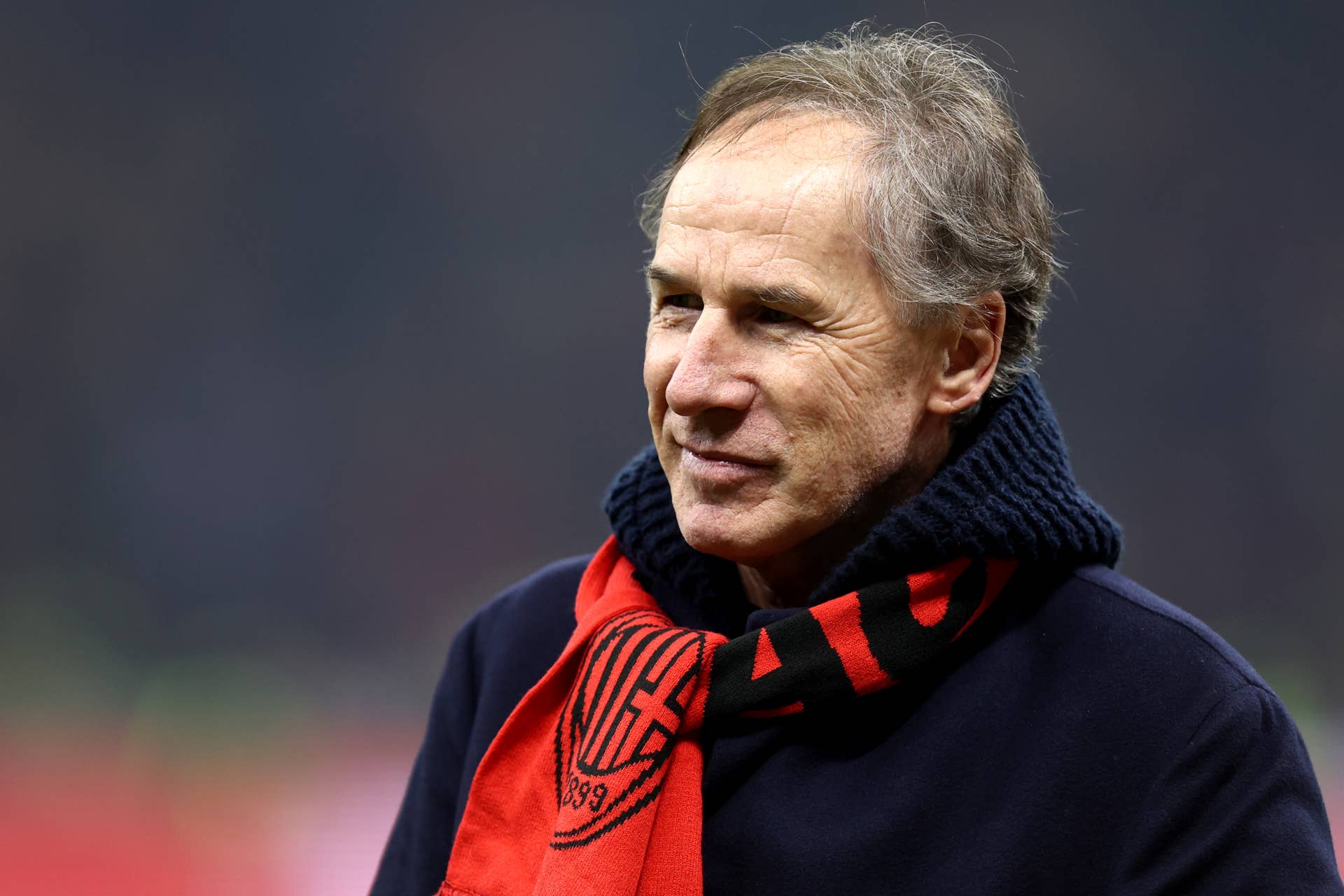
The Day the Football World Stood Still If you love football, there are certain days that just hit differently. July 31, 2026, will forever be etched in the collective memory of the sporting world as a day of profound loss. The news rippled across social media, through the bustling streets of Milan, and into the hearts of millions of fans worldwide: AC Milan and Italy football icon Franco Baresi has died at 66. For anyone who grew up watching Serie A in the 1980s and 90s, Baresi was not just a player. He was an institution. He was the very embodiment of the word “defense.” When we talk about the baresi cause of death, we are not just talking about the passing of a former athlete; we are discussing the end of an era, the final whistle on a life lived with unparalleled integrity, loyalty, and grace.
Franco Baresi was the moral heart of one of the greatest football teams ever assembled. He was “Il Capitano” long before the term was thrown around loosely. In a modern sporting landscape often dominated by mercenaries chasing the highest paycheck, Baresi’s story is a nostalgic reminder of what it means to bleed the colors of your club. As we dive deep into the life, the tactical genius, the legal and philosophical concept of public legacy, and the tragic details surrounding his passing, we celebrate a man whose impact transcended the white lines of the football pitch.
Breaking Down the News: Franco Baresi’s Cause of Death and Final Days The sudden finality of the news left fans in a state of shock, but those close to the AC Milan family knew that the legendary defender had been fighting a quiet battle off the pitch. So, what exactly was the Franco Baresi cause of death? In August 2025, just under a year before his passing, Baresi underwent what was initially described as a minimally invasive surgery. During routine medical checks, doctors had discovered a pulmonary nodule. At the time, the club released a reassuring statement, noting that the surgery was successful and that Baresi, serving as the club’s honorary vice-president, would soon return to his duties. He even expressed his own optimism, telling the press that it would take a little time to get his strength back but that he was ready to tackle the recovery with the same grit he used to tackle opposing strikers.
Following the surgery, Baresi was prescribed a rigorous course of recovery treatments, including immunotherapy managed by top cancer specialists. For a while, things looked incredibly positive. In February 2026, he looked radiant as one of the torchbearers for the Olympic flame at the opening ceremony of the Milano Cortina Winter Games. Standing alongside his longtime pitch rival Giuseppe Bergomi, Baresi smiled, waved, and looked every bit the invincible gladiator fans remembered.
However, behind closed doors, his health began to silently decline. The pulmonary issues proved relentless. In the days leading up to his passing, false rumors circulated on social media, prompting AC Milan to issue a statement asking for privacy as he was going through a “difficult and delicate time.” Ultimately, on Friday morning, July 31, 2026, the club officially confirmed his passing. AC Milan released a heartbreaking statement declaring that the entire history of the club was in tears, emphasizing that his integrity would forever remain etched into the club’s DNA, just like his iconic retired No. 6 shirt.
Forged in Adversity: The Early Life of a Footballing Genius To truly understand the man who would become the ultimate defensive maestro, you have to look at where he came from. Franchino “Franco” Baresi was born on May 8, 1960, in Travagliato, a small town in the province of Brescia, Italy. His childhood was marked by a devastating tragedy that would forge the unbreakable mental resilience he later displayed on the pitch. By the time he was 16, Baresi had lost both of his parents. This catastrophic loss could have broken anyone, but for Franco and his older brother Giuseppe, football became their sanctuary.
Interestingly, Franco’s professional journey began with a rejection that altered the course of football history. He originally went for a trial at Inter Milan, the club where his brother Giuseppe was already making a name for himself. However, the Inter coaches deemed the young Franco too small and physically undeveloped to make it as a professional center-back. They told him to come back next year. Instead, he walked across the city to AC Milan, where he was immediately snapped up into their youth system in 1974. That single moment of rejection by Inter birthed a 20-year romance with the red and black side of Milan.
Baresi made his professional debut for AC Milan at the tender age of 17 in April 1978. By the age of 18, he was a regular starter. He possessed a maturity that belied his years, reading the game a step ahead of everyone else. He wasn’t the tallest defender, nor was he the most physically imposing, but his brain operated on a different frequency. He played with a silent fury, turning the grief of his early life into an immovable wall on the football pitch.
The 20-Year Romance: Baresi and AC Milan When you talk about one-club men, Franco Baresi is the gold standard. He spent exactly two decades in the AC Milan first team, making an astonishing 719 appearances across all competitions. But what makes his loyalty so legendary isn’t just the sheer number of years; it’s the circumstances under which he stayed.
Sticking Through the Dark Years Today, AC Milan is recognized as European royalty, but the early 1980s were arguably the darkest chapter in the club’s storied history. In 1980, Milan was relegated to Serie B due to their involvement in the Totonero match-fixing scandal. While many top players jumped ship to save their careers, a 20-year-old Franco Baresi stayed. He helped guide the team back to Serie A immediately, only for them to suffer a genuine sporting relegation the very next season. Once again, Baresi refused to leave. At just 22 years old, he was handed the captain’s armband. He became the anchor that kept the sinking ship from going completely under. His decision to stay during the Serie B years cemented a bond with the Rossoneri faithful that could never be broken. He wasn’t just a player; he was one of them.
The Sacchi and Capello Eras: Total Football Meets Catenaccio Baresi’s loyalty was handsomely rewarded when Silvio Berlusconi bought the club in 1986, bringing in visionary manager Arrigo Sacchi. Under Sacchi, and later Fabio Capello, Milan morphed into a global juggernaut. Baresi was the linchpin of a legendary backline that included Paolo Maldini, Alessandro Costacurta, and Mauro Tassotti. This defense is widely regarded as the greatest in the history of the sport.
They won three European Cups (Champions League), six Serie A titles, four Italian Super Cups, and two Intercontinental Cups. During the 1991-92 season under Capello, Milan went entirely unbeaten in the league, earning the nickname “The Invincibles.” Baresi was the conductor of this defensive orchestra. The way they moved in unison, catching opposing forwards in perfectly timed offside traps, was a thing of absolute beauty. Baresi was runner-up for the Ballon d’Or in 1989, an incredible feat for a defender, narrowly losing to his teammate Marco van Basten.
Redefining the Sweeper: The Tactical Masterclass of Il Capitano To call Franco Baresi a center-back is almost a disservice. He was the quintessential “libero” or sweeper. Before Baresi, the sweeper was traditionally a rugged, bruising player whose sole job was to clean up mistakes behind the main defensive line and boot the ball into the stands. Baresi revolutionized the role.
Because he lacked the towering height of traditional center-halves, he relied on an almost telepathic anticipation of the game. He didn’t need to tackle you if he already knew where you were going to pass the ball. He would intercept passes with infuriating ease. But what truly set him apart was what he did after winning the ball. Baresi had the technical ability of a central midfielder. He would gracefully bring the ball out from the back, launching devastating counter-attacks with pinpoint long passes.
Under Arrigo Sacchi, Milan played a high-pressing, high-defensive-line system that required immense tactical intelligence. Baresi mastered the offside trap. With a simple raise of his right arm, he would command his entire defensive line to step up simultaneously, leaving world-class strikers stranded offside. It required absolute trust and synchronization. If one player stepped late, the system failed. But with Baresi in command, it rarely failed. He married the traditional Italian defensive grit (catenaccio) with the fluidity of Dutch Total Football.
International Glory and Heartbreak: The Azzurri Years While his club career was flawless, his time with the Italian national team was a dramatic saga of immense highs and agonizing lows. He earned 81 caps for Italy, wearing the legendary blue shirt with the same fierce pride he showed in Milan.
The 1982 Triumph and 1990 Defensive Dominance At just 22, Baresi was part of the Italy squad that won the 1982 FIFA World Cup in Spain. Though he didn’t play a single minute in that tournament due to the presence of the legendary Gaetano Scirea, soaking up that winning atmosphere was crucial for his development.
By the time the 1990 World Cup on home soil rolled around, Baresi was the undisputed leader of the defense. Italy’s performance in that tournament was defensively staggering. With Baresi at the helm, they kept five consecutive clean sheets, not conceding a single goal until the semi-final against Diego Maradona’s Argentina. Italy ultimately finished third, but Baresi’s performances were universally praised. He was a rock, an immovable object that the world’s best attackers simply could not bypass.
The 1994 World Cup Final: A Tragedy in Pasadena If there is one match that defines the sheer willpower of Franco Baresi, it is the 1994 World Cup Final in the United States. During the second group game against Norway, Baresi tore the meniscus in his right knee. It was an injury that usually takes months to heal. He underwent surgery immediately. Miraculously, just 25 days later, he was named in the starting lineup for the final against a Brazilian team spearheaded by the lethal duo of Romário and Bebeto.
Playing under the sweltering heat of the Rose Bowl in Pasadena, California, a less-than-fully-fit Baresi put on a defensive clinic. For 120 grueling minutes, he shut down the Brazilian attack, reading every pass, throwing his body on the line, and forcing the game to a 0-0 draw. It was a superhuman effort.
But football is a cruel scriptwriter. The match went to a penalty shootout. Baresi, exhausted, cramping, and playing on a knee held together by pure adrenaline, stepped up to take the first penalty. He blazed it over the crossbar. He burst into tears on the pitch, a rare display of vulnerability from a man made of steel. Italy eventually lost the shootout, and the image of Baresi weeping is one of the most poignant in World Cup history. Yet, no one blamed him. His 120-minute masterclass just weeks after surgery cemented his status as a living legend.
The Anatomy of a Public Legacy: Integrity in the Modern Era When analyzing the life of someone like Franco Baresi, one cannot help but be struck by his unblemished public record. For 20 years in the spotlight of one of the world’s most football-crazed nations, he never had a scandal. There were no leaked tapes, no courtroom dramas, no defamatory lawsuits. This absolute purity of legacy invites a deeper philosophical discussion on how public figures maintain their reputations, especially when contrasted with the modern era of celebrity downfalls.
Legal Philosophy and the Court of Public Opinion In the realm of legal philosophy, reputation is considered a vital personal asset, heavily guarded by the laws of defamation, libel, and slander. The jurisprudence surrounding public figures is complex. The law inherently recognizes that public figures surrender a certain degree of privacy, opening themselves up to intense scrutiny. The “court of public opinion” often moves faster and more ruthlessly than any court of law. In legal terms, the presumption of innocence is paramount, but in the media, a legacy can be destroyed by a single allegation.
Baresi’s approach to his public life was akin to his approach on the pitch: anticipatory, disciplined, and strictly by the rules. He didn’t just avoid making mistakes; he actively positioned his life in a way that left no room for error. The legal philosophy of “duty of care”—the obligation to avoid acts or omissions that could foreseeably harm others—was something Baresi seemed to naturally apply to his personal and professional conduct. He felt a deep duty of care to the AC Milan badge, to his family, and to his fans.
Defending a Legacy: Notable Cases of Harvey Weinstein and Rudy Giuliani To truly appreciate the rarity of Baresi’s pristine legacy, we must contrast it with the fragility of reputations in the modern era, where monumental legacies have been reduced to ashes in courtrooms. Take, for instance, two of the most spectacular reputational collapses of our time: Harvey Weinstein and Rudy Giuliani.
Harvey Weinstein was once the untouchable titan of Hollywood. His legacy was built on producing Oscar-winning masterpieces and shaping modern cinema. However, his legacy was entirely dismantled by a horrific history of sexual abuse. The legal philosophy surrounding the Weinstein trials was monumental, bringing the concepts of systemic power dynamics, the definition of consent, and the use of prior bad acts (like the Molineux rule in New York) to the forefront of global legal discourse. Weinstein’s defense in the courtroom was built on obfuscation and denial, a stark contrast to the transparent, rule-abiding defense Baresi practiced on the pitch. Weinstein’s convictions destroyed a lifetime of work in a matter of months, proving that a legacy built on exploitation is fundamentally a house of cards.
Similarly, look at the tragic legal and reputational downfall of Rudy Giuliani. In the aftermath of 9/11, Giuliani was globally revered as “America’s Mayor.” His leadership in a time of crisis secured a legacy that seemed untouchable. Yet, fast forward two decades, and Giuliani finds himself disbarred, bankrupt, and drowning in defamation lawsuits. The legal philosophy here centers around the concept of truth and defamation. By repeatedly peddling baseless conspiracy theories and defaming innocent election workers (such as Ruby Freeman and Shaye Moss, leading to a crippling $148 million judgment), Giuliani actively destroyed his own credibility. His legacy was not taken from him; he surrendered it through a failure to adhere to the basic legal and moral principles of truth.
The Contrast: Why Baresi’s Reputation Remains Bulletproof These examples highlight a profound philosophical truth: a legacy is not just what you build; it is what you protect. Weinstein and Giuliani failed to protect their legacies because they believed they were above the rules. Franco Baresi operated with the exact opposite mindset. On the pitch, he was the enforcer of the rules, relying on the offside trap—a tactic that literally relies on the strict enforcement of the game’s laws. Off the pitch, he applied the same discipline.
Baresi’s defense in life never required high-priced lawyers, non-disclosure agreements, or aggressive PR spin. His defense was his character. While modern public figures often find themselves battling in civil and criminal courts to salvage shreds of their dignity, Baresi leaves behind a legacy that requires no defense. It stands entirely on its own merit, a testament to the fact that true greatness is inseparable from personal integrity.
Media Presence: Navigating Fame with Silent Grace In an era where footballers have millions of Instagram followers, reality TV shows, and carefully curated media personas, Franco Baresi’s media presence was remarkably understated. He belonged to a generation where your talking was done strictly on the grass. Baresi rarely gave bombastic interviews. He didn’t call out managers, he didn’t demand transfers in the press, and he certainly didn’t engage in petty feuds.
His silence was his strength. When he did speak, the Italian media listened with a hushed reverence. He was treated not just as a sports star, but as a respected statesman of the game. Even in his post-retirement years, as he took on ambassadorial roles and the honorary vice-presidency at AC Milan, his media footprint was characterized by dignity. Whether he was launching a new club initiative or holding the Olympic torch ahead of the Milano Cortina 2026 Winter Games, he carried himself with an aura of regal calmness. He proved that you do not need to shout to be heard, and you do not need controversy to remain relevant.
Community Impact: Life After the Pitch Franco Baresi’s retirement in 1997 didn’t end his connection to the community; it merely evolved it. AC Milan immediately retired his number 6 shirt—the first time the club had ever done so. But Baresi didn’t just retreat to a golf course. He poured his heart back into the youth.
He managed the AC Milan Primavera (under-19) squad and the Berretti (under-18) team in the early 2000s, desperate to impart his wisdom onto the next generation of Italian defenders. Beyond the touchline, Baresi was deeply involved in charitable endeavors. He spearheaded campaigns for children’s hospitals in Lombardy and used his massive platform to raise funds for cancer research—a cause that would tragically become deeply personal in his final year of life.
His impact on the community of Milan was palpable. He wasn’t just a former employee of a football club; he was a pillar of the city. He embodied the hardworking, resilient spirit of the Milanese people. When parents in Italy wanted to teach their children about sportsmanship, dedication, and loyalty, they didn’t point to the flashy strikers; they pointed to Franco Baresi.
Global Tributes: Football Weeps for Its Greatest Defender The confirmation of the Franco Baresi cause of death unleashed a tidal wave of grief and tribute across the globe. The tribalism of football was temporarily paused as arch-rivals came together to mourn.
Inter Milan, the club that famously rejected him as a boy and fought brutal battles against him for twenty years, released a touching statement: “Farewell to Franco Baresi, protagonist of the great clashes in the Milan Derby… Captain, team man, and flag bearer of AC Milan, he lived every matchup with Inter between competition and respect, within a challenge that wrote unforgettable pages of Italian soccer.”
Juventus also paid their respects, stating, “There are people who, with their talent, enter history. And others who, with their humanity, remain there forever. Franco Baresi was both. Class, style, leadership, and respect on and off the field.”
FIFA President Gianni Infantino and FIGC President Giovanni Malago both released statements calling him a legend who entered the hearts of millions. Former teammates like Paolo Maldini, who inherited the captain’s armband from Baresi, expressed profound heartbreak, noting that Baresi was the mentor who taught him everything about defending, leading, and being a man. The sheer volume and emotional depth of these tributes underline a simple fact: the football world has lost a titan.
Frequently Asked Questions About Franco Baresi
What was the Franco Baresi cause of death? Franco Baresi passed away on July 31, 2026, at the age of 66. While AC Milan did not specify an exact acute cause of death on the day of his passing, it is widely known that he underwent surgery to remove a pulmonary nodule in August 2025 and had been undergoing treatments with cancer specialists over the past year.
How many years did Franco Baresi play for AC Milan? Baresi played for AC Milan for his entire 20-year professional career. He made his senior debut in 1978 and retired in 1997, accumulating an incredible 719 appearances for the club.
Did Franco Baresi win the World Cup? Yes, Franco Baresi was part of the Italian national squad that won the 1982 FIFA World Cup in Spain, although he did not make an appearance in that specific tournament. He later captained Italy to a third-place finish in 1990 and a runner-up finish in 1994.
Why is Franco Baresi considered one of the greatest defenders ever? Baresi revolutionized the sweeper role. Despite lacking typical physical height for a center-back, his unrivaled tactical intelligence, reading of the game, precise tackling, and ability to launch attacks from deep made him a complete player. He anchored the AC Milan defense that dominated European football in the late 80s and early 90s.
Why did AC Milan retire the number 6 shirt? AC Milan retired the number 6 shirt in 1997 to honor Franco Baresi’s unparalleled loyalty, leadership, and success at the club. He stood by the team through two relegations and captained them during their most successful era. He was the first player in the club’s history to receive this ultimate honor.
The passing of Franco Baresi leaves a void that can never truly be filled. He was a master of his craft, a gentleman of the game, and a symbol of unwavering loyalty. While the tears flow freely in Milan today, the legacy of the legendary Number 6 will stand eternal. Baresi is forever.