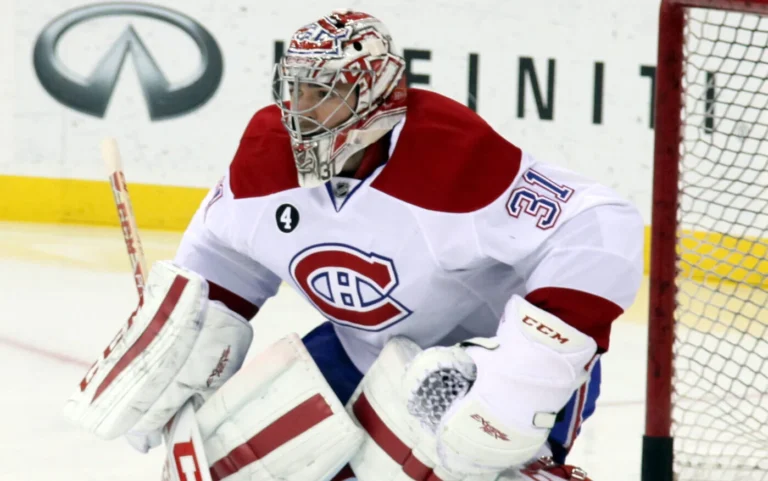
If you have been scrolling through social media lately and felt your heart drop into your stomach upon seeing Carey Price obituary rumors, take a deep breath. Let us set the record straight immediately: Carey Price is not dead. The legendary Montreal Canadiens goaltender is very much alive, spending time with his family, and living out his post-hockey life.
The internet is a wild, unregulated place where false information can spread like a wildfire in high winds. The recent surge in searches asking “Is Carey Price dead?” is the result of a vicious rumor mill, clickbait culture, and potentially a massive misunderstanding regarding his career-ending knee injury. When news broke that his playing career was effectively “dead” due to severe cartilage loss, algorithmic aggregators and malicious hoaxers spun that phrasing into literal death reports. These false reports have been vehemently denied.
In this comprehensive guide, we are going to dive deep into the truth behind the Carey Price obituary rumors. We will explore how these malicious hoaxes gain traction, look at the legal philosophy surrounding fake news and defamation, and provide a definitive update on Price’s actual health and legendary legacy.
The Truth Behind the Carey Price Death Hoax
It happens almost every week to a different celebrity, athlete, or politician. One moment, they are going about their day, and the next, they are trending on Twitter, TikTok, and Facebook with a black-and-white photo and a set of dates beneath their name. The Carey Price death hoax is just the latest in a long, exhausting line of internet falsehoods.
Breaking Down the Rumors: Is Carey Price Alive?
Yes, Carey Price is absolutely alive. At the time of this writing, he is residing in British Columbia with his wife, Angela, and their children, enjoying a quiet life far removed from the intense pressure cooker of the Montreal media market.
The Carey Price obituary rumors seemed to materialize out of nowhere, popping up on obscure, ad-heavy websites and automated YouTube channels that use AI-generated voiceovers. These platforms thrive on shock value. By targeting a beloved, high-profile figure like Price—who holds a god-like status in the province of Quebec and across the Canadian hockey landscape—the creators of these rumors knew they could generate instant panic. Panic leads to frantic Google searches, which leads to clicks, which ultimately lines the pockets of the hoaxers with ad revenue.
When you see a headline like “Carey Price Dead?” or “Tragic News for the Price Family,” it is designed to exploit your emotional attachment to the player. But let there be no doubt: these reports are entirely baseless. Carey Price is doing just fine.
How “Career Dead” Turned Into “Literally Dead”
To understand how this specific rumor gained so much traction, we have to look at the timeline of Carey Price’s actual health updates. For years, fans have been waiting with bated breath for updates on his injured knee. Recently, in June 2026, the former Canadiens’ team doctor David Mulder gave a candid interview detailing exactly what ended Price’s career. Mulder explained that during an operation in New York for a meniscus issue, surgeons discovered that Price’s femur had lost all of its cartilage. It was a shocking revelation that confirmed what many feared: Price’s career was over.
In the fast-paced, context-lacking world of social media, nuance is the first casualty. Sports blogs and fans began tweeting phrases like “Carey Price’s time is dead,” “The tragic end of Carey Price,” and “Heartbreaking news for Carey Price.”
Foreign content farms and artificial intelligence bots scrape the internet for trending keywords. When an AI bot sees “Carey Price,” “tragic,” “end,” and “dead” clustered together in high volumes, it assumes the person has passed away. The bots then auto-generate articles and videos claiming he has died. Before human fact-checkers can intervene, the algorithm pushes the content to thousands of feeds. This is how a medical update about a knee injury morphs into a full-blown death hoax.
The Montreal Canadiens and Family Response
While the Montreal Canadiens organization rarely issues formal press releases for every internet rumor, those close to the team and the Price family have continuously dismissed any notion of tragedy. Angela Price, Carey’s wife, remains highly active on social media, frequently posting updates about their family life, outdoor adventures, and charitable endeavors. Her lively, everyday posts serve as the ultimate debunking of any morbid rumors.
When you are a public figure, your family often bears the brunt of these hoaxes. Having to answer text messages from concerned distant relatives who saw a fake obituary on Facebook is a grim reality for modern athletes. The family’s silent resilience, choosing to live their truth rather than constantly feeding the trolls, speaks volumes about their character.
Decoding the Anatomy of an Internet Death Hoax
The Carey Price obituary rumors are a symptom of a much larger disease infecting the digital landscape. We live in an era where truth is often paywalled, while lies are free and widely distributed. Understanding the anatomy of a death hoax is crucial to protecting yourself from digital manipulation.
The Role of Social Media Algorithms in Spreading Fake Obituaries
Social media platforms like X (formerly Twitter), Facebook, and TikTok do not inherently care if a piece of information is true or false; they care about engagement. Anger, shock, and grief are the most engaging human emotions. When a user sees a post claiming a beloved sports icon has died, their immediate reaction is to comment (“Is this true?!”), share it with their friends, or angrily quote-tweet it to debunk it.
Ironically, even the people trying to debunk the hoax inadvertently signal to the algorithm that the post is highly engaging. The algorithm then pushes the fake news to an even wider audience. It is a vicious cycle. The platforms are designed to reward virality over veracity, making it incredibly easy for malicious actors to spread false reports of an athlete’s death.
Clickbait Culture, AI, and the Monetization of Fake News
Why do people create these hoaxes in the first place? The answer is almost always money.
In the dark corners of the internet, there are entire digital sweatshops dedicated to “arbitrage content.” Here is how it works: a creator uses a cheap AI program to write a sensational headline and a 300-word article filled with keyword stuffing (like “Carey Price Obituary Rumors – Carey Price Dead? False Reports Denied”). They pair it with a misleading thumbnail. When thousands of panicked fans click the link, they are bombarded with display ads. The creator makes a few hundred or a few thousand dollars before the web host finally takes the site down.
This monetization of fake news is a multi-million dollar underground industry. For these creators, Carey Price is not a human being with a family, a legacy, and feelings; he is merely a highly searchable keyword that can be exploited for a quick payday.
Carey Price’s Real Status: A Career Ended by Injury
Now that we have firmly squashed the death rumors, let us talk about the reality of Carey Price’s situation. The truth is heartbreaking in its own way for hockey fans, but it is a reality grounded in the physical toll of professional sports, not mortality.
The Meniscus and Cartilage Injury That Stopped Time
Carey Price was the backbone of the Montreal Canadiens for over a decade. He carried the franchise on his shoulders, facing thousands of high-velocity shots and making acrobatic, butterfly-style saves that defied human anatomy. But the human body is not invincible.
The 2021 Stanley Cup Playoffs were a magical run. Price willed a massive underdog Montreal team all the way to the Stanley Cup Final against the Tampa Bay Lightning. He played through agonizing pain, sacrificing his body for the crest on his chest. We later learned the true cost of that playoff run.
Price underwent knee surgery to repair a torn meniscus, a procedure that many athletes bounce back from. However, the damage was far more severe. As Dr. David Mulder later revealed, the surgeons found that the cartilage in his femur was completely gone. In medical terms, it was bone-on-bone. There is no surgery, no rehabilitation, and no brace that can rebuild lost cartilage to a degree that allows a goaltender to play at the NHL level.
Price attempted several comebacks. He pushed through agonizing rehab sessions, driven by his love for the game and his teammates. He managed to play five games at the end of the 2021-2022 season, giving the fans at the Bell Centre one last glimpse of his greatness. But the pain was insurmountable. His playing career ended not with a retirement press conference, but with the quiet realization that his body had given everything it had to give.
Transition to the NHL Player Assistance Program
Physical injuries were only half of the battle for Carey Price. In one of the most courageous moves of his life, Price voluntarily entered the NHL/NHLPA Player Assistance Program in October 2021. He later opened up to the public, admitting that he had been struggling with substance use, specifically alcohol, to cope with the immense pressures of his career and the anxiety of social situations.
For a man who always appeared to be the calmest person in the arena, this revelation was a shock to the hockey world. But it also humanized him in a profound way. Price recognized that he was heading down a dark path and took control of his life, prioritizing his role as a father and a husband over his role as a hockey player.
When fake obituaries circulate about a person who has publicly battled substance abuse, it adds a sickening layer of cruelty to the hoax. Fans naturally fear a relapse or a tragic end, making the rumors all the more believable and devastating. It highlights the reckless disregard that fake news peddlers have for the real-life struggles of their subjects.
Mental Health Advocacy and Life After the Crease
Today, Carey Price’s real status is that of a survivor, an advocate, and a family man. By speaking openly about his struggles with alcohol and mental health, he shattered the toxic “tough guy” stigma that has long plagued professional hockey. He showed that asking for help is not a sign of weakness, but the ultimate display of strength.
He has transitioned into a quiet life, focusing on his Indigenous roots, outdoor hunting and fishing, and raising his children. He remains on the Canadiens’ payroll via long-term injured reserve (LTIR), functionally retired but forever tethered to the organization that drafted him fifth overall in 2005.
Legal Philosophy: Defamation and Fake News in the Digital Age
The proliferation of the Carey Price death hoax opens up a fascinating and troubling conversation about media law, defamation, and the legal philosophy of truth in the digital age. When someone publishes a lie about a public figure, where is the line between free speech and unlawful defamation?
The Legal Ramifications of Publishing Fake Obituaries
In traditional media law, publishing a false claim that harms someone’s reputation is considered defamation (libel, when written). If a legitimate newspaper published an article claiming Carey Price was dead, the legal blowback would be swift and severe. It would cause intentional infliction of emotional distress to his family, and the publication would be forced to issue massive retractions and potentially pay damages.
However, the internet operates in a murky legal gray area. Section 230 of the Communications Decency Act in the United States (and similar frameworks globally) generally protects social media platforms from being sued for what their users post. If a random anonymous user on X posts a fake obituary, you cannot sue X. And suing the anonymous user is often impossible, as they could be a bot farm operating out of a different country with no jurisdiction. This legal shield has allowed fake news to flourish without consequence.
Notable Cases in Media Law: The contrast of Rudy Giuliani and Harvey Weinstein
To truly understand how the legal system handles false reports and defamation, we must look at high-profile case studies. While a fake death hoax about an athlete is vastly different from criminal allegations or political defamation, the underlying legal philosophy—the demand for truth and the consequences of publishing lies—remains the same.
Take the case of Harvey Weinstein. When investigative journalists like Jodi Kantor, Megan Twohey, and Ronan Farrow were exposing his decades of sexual abuse, they were operating under the strictest, most rigorous standards of media law. They knew that if they published a single unverified rumor, Weinstein’s powerful legal team would sue them for defamation and bankrupt their publications. They needed airtight proof, on-the-record sources, and corroborated documents. The legal system forced them to be meticulously truthful.
Contrast that rigorous demand for truth with the chaotic spread of fake news today.
On the opposite end of the spectrum, look at Rudy Giuliani. Following the 2020 election, Giuliani repeatedly pushed false claims and conspiracy theories about two Georgia election workers, Ruby Freeman and Shaye Moss. Unlike anonymous internet trolls, Giuliani was a public figure making verifiable, false statements that destroyed the lives of private citizens. The legal system finally caught up with him, resulting in a staggering $148 million defamation judgment against him. The Giuliani case serves as a monumental legal precedent: there are severe financial consequences for spreading malicious lies that cause tangible harm.
But here is the philosophical dilemma: the legal tools used to hold Giuliani accountable are almost entirely useless against the creators of the Carey Price death hoax. You cannot easily serve a defamation lawsuit to a faceless AI algorithm or an offshore clickbait farm. The law was built for an era of newspapers and public speeches, not for a digital landscape where anonymous actors can manufacture reality at the push of a button. Public figures are left legally defenseless against the viral spread of false obituaries.
Protecting Public Figures: Do Athletes Have Legal Recourse?
So, what can athletes like Carey Price do when they are targeted by fake reports? In the United States, public figures face an incredibly high bar to win a defamation lawsuit. Under the precedent set by New York Times Co. v. Sullivan, a public figure must prove “actual malice”—meaning they must prove the publisher knew the information was false and published it anyway with reckless disregard for the truth.
Proving actual malice against a fake news farm is virtually impossible because discovering the true identity of the publisher is a digital wild goose chase. Ultimately, the best defense athletes have is a strong PR strategy. By maintaining active, authentic social media presences—like Angela Price does—they control their own narrative. When the truth is highly visible, the lies wither in the light.
The Impact of False Reporting on Athletes and Families
We often forget the human element when discussing internet rumors. We analyze the SEO, the clicks, and the algorithms, but behind every keyword is a real family.
The Psychological Toll on the Price Family
Imagine waking up, pouring a cup of coffee, and having your phone explode with messages asking if your husband is dead. For Angela Price, navigating Carey’s career has always meant dealing with public scrutiny, but death hoaxes cross a sacred boundary.
Athletes and their families already endure a massive psychological toll. They deal with trade rumors, critiques of their performance, and constant public surveillance. Carey Price has already been to the darkest depths of mental health struggles, battling severe anxiety and relying on the NHL Player Assistance Program to save his life. To then have malicious actors weaponize his existence for clicks is a profound violation of peace. It forces the family into a defensive posture, having to reassure loved ones while simultaneously ignoring the toxic noise of the internet.
Community Reaction in Montreal and the Broader NHL
In Montreal, hockey is a religion, and Carey Price is a saint. He is the winningest goaltender in the history of the most storied franchise in the NHL. When rumors of his passing began to circulate, the collective heart of the city stopped.
The immediate reaction on fan forums and social media was sheer panic. Fans began sharing tribute videos, recounting his greatest saves, and expressing heartbreak. When the truth emerged that it was a hoax, that grief quickly turned to fury. Fans were outraged that someone would play with their emotions and disrespect a living legend. It galvanized the fan base, reminding everyone of just how much Price means to the fabric of the community. It also served as a harsh wake-up call for fans to be more critical of the sources they trust online.
Carey Price’s Legacy: A Living Legend in Montreal
Since we are talking about Carey Price, let us take this opportunity to celebrate him while he is here. We do not need an obituary to reflect on the monumental impact he has had on the game of hockey. He is a living legend, an icon who redefined his position and inspired a generation.
Vezina, Hart, and Olympic Gold: A Hall of Fame Resume
Drafted 5th overall by the Canadiens in 2005, Carey Price came into the league with the weight of the world on his shoulders. Montreal had been searching for the next Patrick Roy for a decade, and they placed that burden squarely on the young kid from Anahim Lake, British Columbia.
He didn’t just meet expectations; he shattered them. His 2014-2015 NHL season is arguably the greatest single season by a goaltender in modern hockey history. He posted a 1.96 goals-against average, a .933 save percentage, and won 44 games. He swept the NHL Awards, taking home the Vezina Trophy (best goaltender), the William M. Jennings Trophy (fewest goals allowed), the Ted Lindsay Award (most outstanding player as voted by peers), and the Hart Memorial Trophy (league MVP). It is incredibly rare for a goaltender to win the Hart Trophy, but Price was simply undeniable.
Beyond the NHL, Price is a Canadian national hero. At the 2014 Winter Olympics in Sochi, he delivered a masterclass in goaltending. He allowed only three goals in five games, posting two shutouts (including one in the gold medal game against Sweden) to lead Team Canada to Olympic Gold. He was named the tournament’s best goaltender. Two years later, he anchored Canada to victory in the 2016 World Cup of Hockey.
The Calmness in the Crease: Redefining Goaltending
Statistics only tell part of the story. What made Carey Price a generational talent was his demeanor. In a position defined by chaos, frantic movements, and desperation, Price was a monument of tranquility.
Hockey analysts often talked about “Carey Price calm.” His edge work was so precise, his anticipation so elite, that he rarely had to make a sprawling, dramatic save. He was always perfectly positioned, letting the puck hit him right in the crest. He moved post-to-post with effortless fluidity, tracking the puck through traffic with laser focus. Young goaltenders across the world began modeling their game after him, trying to replicate his quiet efficiency. He proved that you did not need to be chaotic to be explosive; you just had to be perfect.
Off-Ice Impact: Indigenous Advocacy and Charity Work
Carey Price’s legacy off the ice is just as impressive as his trophy cabinet. Proud of his Ulkatcho First Nation heritage, Price has been a tireless advocate for Indigenous communities across Canada. He has used his massive platform to bring awareness to issues facing First Nations youth, promoting education, sports, and mental health resources.
His philanthropic efforts are legendary. He and Angela have been heavily involved with the Breakfast Club of Canada, ensuring that thousands of children have access to nutritious meals before school. He has quietly funded minor hockey programs, purchased equipment for underprivileged kids, and spent countless hours visiting sick children in Montreal hospitals.
He has always understood that being the goaltender for the Montreal Canadiens is about more than stopping pucks; it is about being an ambassador for the community. Even in retirement, his charitable work continues, cementing his status as one of the most beloved figures in Canadian sports history.
Frequently Asked Questions (FAQ) About Carey Price
To completely resolve any lingering doubts and provide a clear, factual resource, here are the answers to the most frequently asked questions surrounding the Carey Price obituary rumors and his current status.
Is Carey Price dead? No. Carey Price is alive and well. Any reports or rumors claiming he has passed away are entirely false and part of a malicious internet hoax.
Where is Carey Price now? Carey Price currently resides in British Columbia, Canada, with his wife Angela and their children. He enjoys a quiet life focused on his family, the outdoors, and his continued charitable efforts.
Did Carey Price officially retire? Technically, Carey Price has not officially filed retirement papers. He remains on the Montreal Canadiens’ long-term injured reserve (LTIR) list because his contract runs through the 2025-2026 season. However, he has publicly stated that his playing career is over due to his knee injury, and he will not play professional hockey again.
What exactly happened to his knee? Price originally tore his meniscus, but during surgery, doctors discovered that the cartilage in his femur was completely worn away. The “bone-on-bone” condition makes it impossible for him to withstand the physical demands of playing goaltender in the NHL.
Why did Carey Price go into the NHL Player Assistance Program? In October 2021, Price entered the program to seek treatment for substance use, specifically addressing a dependence on alcohol. He bravely admitted he needed help coping with his mental health and the pressures of his career. He successfully completed the program and continues to be a strong advocate for mental health and addiction recovery.
Will Carey Price make the Hockey Hall of Fame? Yes. Although he was never able to capture a Stanley Cup, his overwhelming dominance, his sweep of the NHL awards in 2015, his Olympic Gold medal, and his status as the winningest goaltender in the history of the Montreal Canadiens make him an absolute lock for the Hockey Hall of Fame once he is officially eligible.
Why do fake death rumors start? Fake death rumors are typically started by clickbait websites, malicious social media accounts, and AI-driven content farms that exploit trending topics. They use shocking, false headlines to generate clicks, which they then monetize through display advertising.
The Carey Price obituary rumors are a stark reminder of how easily false information can spread in the modern digital age. The internet’s demand for clicks often overshadows basic human decency, turning real people into targets for monetization. However, the truth is clear and undeniable: Carey Price is alive, his legacy is immortal, and he continues to be an inspiration both on and off the ice. As fans and consumers of media, it is our responsibility to verify the facts, ignore the noise, and celebrate the living legends while they are still here with us.