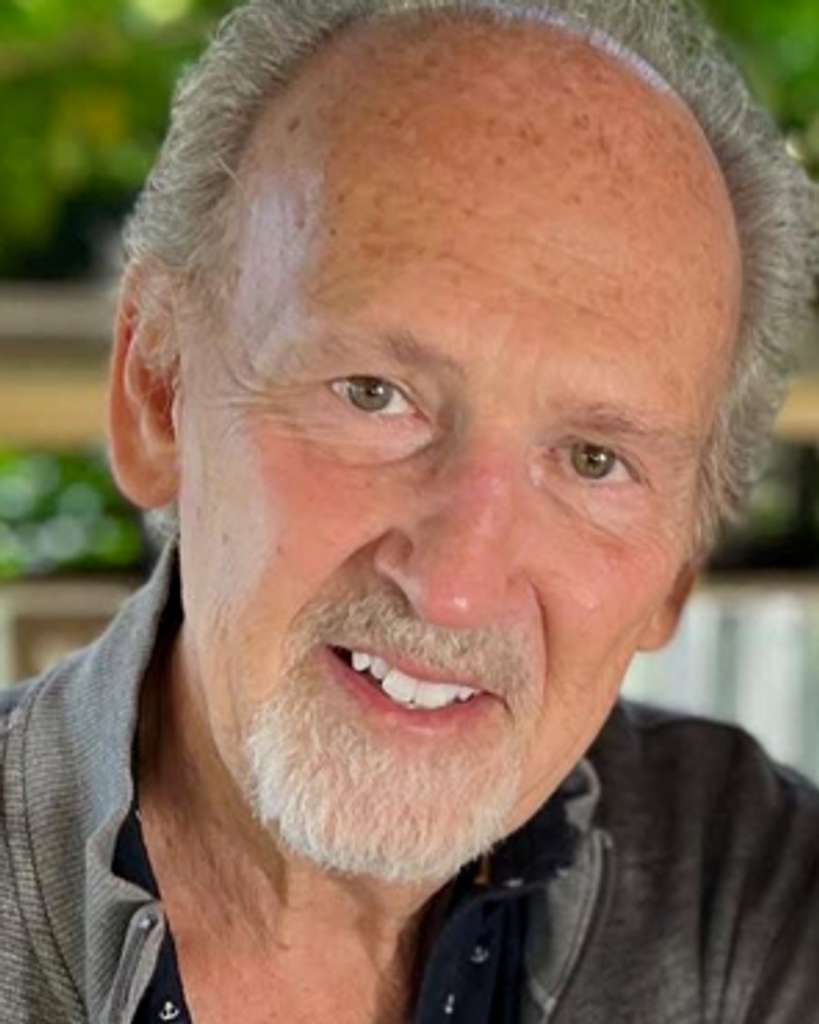
David Lee McIntire 77 Obituary-It’s hard to imagine the streets of Connellsville without the steady, reassuring presence of David Lee McIntire. When a small town loses someone who has been a permanent fixture in its daily rhythm for decades, it leaves an undeniable void. The recent news surrounding the David Lee McIntire 77 obituary in Connellsville has sent a ripple of deep sorrow, reflection, and profound gratitude throughout Fayette County. David wasn’t just a man who lived in the town; he was a vital part of its lifeblood. As a beloved local pharmacist, a fiercely intellectual conversationalist, and a compassionate neighbor, his legacy stretches far beyond the walls of his pharmacy.
At 77 years old, David passed away leaving behind a community that had come to rely on his medical expertise, his sharp wit, and his incredibly deep understanding of the world. Writing an obituary for a man of this magnitude requires more than just listing dates and surviving family members. It requires a deep dive into the very fabric of who he was. People are complex. They are the sum of their professions, their passions, their quiet moments, and their loud debates. David was a healer by trade, but he was a philosopher at heart. To truly understand the impact of his life, we have to explore everything from his roots in a historic Pennsylvania coal town to his deep-seated fascination with legal ethics, media narratives, and the shifting landscape of American justice.
Early Life and Roots in Historic Connellsville
To know David Lee McIntire is to know Connellsville, Pennsylvania. You simply can’t separate the man from the environment that forged him. Nestled along the banks of the Youghiogheny River, Connellsville was once the undisputed “Coke Capital of the World.” During the late 19th and early 20th centuries, the coal mined in this region was baked into coke and shipped off to fuel the massive steel mills of Pittsburgh. This rich industrial history birthed a community characterized by grit, resilience, hard work, and a profound sense of neighborly duty.
David was born into this environment, inheriting the quiet strength that defines the people of Fayette County. Growing up in Connellsville during the mid-20th century meant understanding the value of a dollar and the importance of a handshake. It was a time when everybody knew everybody, and your reputation was your most valuable currency. As a young boy, David was known for his insatiable curiosity. While other kids were solely focused on neighborhood games, David was an avid reader, constantly consuming newspapers, history books, and scientific encyclopedias.
His early education in the local public school system laid the foundation for his future endeavors. Teachers often noted his analytical mind. He didn’t just want to know how something worked; he wanted to know why it worked. This unique blend of scientific inquiry and deep human empathy ultimately led him toward a career in healthcare. He saw pharmacy not just as a retail job, but as a crucial intersection of science and community service.
A Lifelong Dedication to Healthcare: The Beloved Pharmacist
For over four decades, David Lee McIntire was the face of local healthcare for thousands of residents. Before the era of massive, impersonal corporate pharmacy chains took over every street corner, the local independent pharmacist was a revered figure. When you walked into David’s pharmacy, you weren’t just a prescription number. You were a human being with a story, a family, and a set of unique anxieties about your health.
The Evolution of Pharmacy Practice
David’s career spanned a period of massive transformation in the medical field. When he first started, pharmacy involved a great deal of compounding—mixing active ingredients to create customized medications tailored to individual patients. It was as much an art as it was a science. Over the years, the industry shifted dramatically toward mass-produced pharmaceuticals, complex insurance bureaucracies, and digital prescribing systems.
Through all these changes, David remained a steadfast anchor. He adapted to the technology, but he wholly refused to abandon his personalized approach. He would spend hours navigating the red tape of insurance companies just to make sure an elderly patient could afford their heart medication. He understood that the modern healthcare system could be terrifying and alienating, so he made it his personal mission to be the translator and the advocate for his community.
Patient Care and Boundless Empathy
There are countless stories circulating in Connellsville today about David’s late-night heroics. If a child spiked a fever at 2:00 AM and a worried mother called him, David wouldn’t hesitate to go down to the pharmacy, unlock the doors, and provide the necessary medicine. He was a counselor as much as he was a pharmacist. People came to him not just for pills, but for peace of mind.
He listened to diagnoses of cancer, diabetes, and chronic pain with a compassionate ear. He held the hands of grieving widows and celebrated the births of new children. In a world that was moving faster and becoming increasingly disconnected, David’s pharmacy counter remained a sanctuary of genuine human connection.
Beyond the Counter: A Deep Thinker on Legal Philosophy and Justice
While the community revered him for his medical care, those who truly knew David understood that his mind was constantly exploring territories far outside the realm of pharmacology. David was a voracious consumer of legal philosophy, political science, and constitutional law. He possessed an intellect that rivaled seasoned attorneys, and he loved nothing more than a rigorous, respectful debate.
The Pharmacy as a Modern Town Square
In many ways, David’s pharmacy counter functioned as the modern equivalent of the colonial town square. When the morning rush subsided, locals would lean against the counter to discuss the news of the day. David was never one to accept a superficial media narrative. He challenged his friends and customers to look deeper, to question the underlying legal principles of the events broadcasting across their television screens.
Natural Law vs. Legal Positivism in Everyday Discourse
David often framed these discussions through the lens of classical legal philosophy. He was fascinated by the tension between legal positivism—the idea that law is synonymous with the rules enacted by a recognized authority, regardless of morality—and natural law, which argues that our laws must reflect inherent, universal moral principles. If a high-profile court case ended in a controversial verdict, David wouldn’t just complain about the outcome. He would dissect the judge’s instructions, the evidentiary rulings, and the fundamental philosophy guiding the decision. He believed that an informed citizenry was the only defense against a corrupt justice system.
Analyzing Notable Cases: Harvey Weinstein and the Shifting Legal Landscape
To fully appreciate the depth of David’s intellectual pursuits, one has to look at the kinds of topics that captivated his attention in his later years. The intersection of cultural movements and the rigid structure of the American legal system was a frequent topic of debate at his counter. Few cases illustrated this better than the monumental trials of Harvey Weinstein.
The Weinstein saga wasn’t just a story about a Hollywood mogul’s spectacular fall from grace; it was a stress test for the American judicial system. When the #MeToo movement ignited, it brought a long-overdue cultural reckoning regarding sexual abuse and power dynamics. However, as David often pointed out to his peers, the court of public opinion operates on an entirely different set of rules than a court of law.
Evidentiary Standards and the Molineux Rule
David was intensely interested in the legal mechanics that led to Weinstein’s convictions and the subsequent, highly controversial overturning of his New York conviction by the state’s Court of Appeals. The debate centered around the Molineux rule, a complex legal doctrine that dictates when prior, uncharged bad acts can be presented to a jury.
In New York, the prosecution brought forward several women whose allegations were not part of the actual criminal charges to establish a pattern of behavior. For the general public, this made perfect sense. But legally, as David would explain to anyone willing to listen, admitting this evidence runs the massive risk of prejudicing a jury, trying a man for his character rather than the specific crimes on the indictment. When the appellate court overturned the conviction—citing that the trial judge admitted excessive and prejudicial testimony—it sent shockwaves through the media. David viewed this not as a defense of a terrible person, but as a critical, albeit uncomfortable, validation of the presumption of innocence and the strict adherence to evidentiary rules. It was a perfect, real-world example of his belief that the law must remain blind, even when the public is screaming for vengeance.
The Intersection of Media Presence and Public Perception
The Weinstein case also highlighted the staggering power of media presence. Before the jury was even selected, the media had thoroughly dissected every aspect of the case. David frequently expressed concern over how impossible it was becoming to find an impartial jury in the digital age. He understood that while media is essential for exposing corruption and bringing dark deeds to light, it also has the terrifying potential to steamroll the constitutional right to a fair and unbiased trial.
Rudy Giuliani and the Complexities of Legal Ethics
Another legal saga that fascinated David and sparked endless discussions in Connellsville was the steep and tragic legal descent of Rudy Giuliani. For a man of David’s generation, Giuliani was initially known as the hard-charging U.S. Attorney for the Southern District of New York—the man who utilized the Racketeer Influenced and Corrupt Organizations (RICO) Act to bring the American Mafia to its knees in the 1980s. He was later immortalized as “America’s Mayor” following the tragic events of September 11, 2001.
From RICO Prosecutions to Defamation Lawsuits
The irony of Giuliani’s later years was a subject David found deeply compelling from a legal ethics standpoint. Fast forward to the aftermath of the 2020 election, and the man who pioneered the use of RICO statutes was suddenly indicted under similar state-level racketeering laws in Georgia and Arizona.
Furthermore, Giuliani faced catastrophic defamation lawsuits. The most notable resulted in a staggering $148 million judgment awarded to Ruby Freeman and Shaye Moss, two Georgia election workers whose lives were upended by false claims of election fraud. David frequently used this case to illustrate the profound boundaries of the First Amendment. While freedom of speech is the bedrock of American liberty, David noted that it does not provide a shield against defamatory lies that cause demonstrable harm to private citizens.
The Disbarment Proceedings and First Amendment Defenses
Giuliani’s subsequent disbarment proceedings in New York and Washington, D.C. served as a masterclass in professional responsibility—a topic David respected immensely given his own strict code of ethics in pharmacy. Lawyers are officers of the court, bound by a duty of candor. When Giuliani’s legal team attempted to argue that his false statements were protected political speech, the courts fundamentally disagreed, ruling that an attorney cannot knowingly propagate falsehoods to subvert democratic processes.
For David, watching the downfall of such a prominent legal figure was a tragic but necessary affirmation that the system of legal ethics still held weight. He believed that no matter how powerful the individual or how loud their media megaphone, the foundational rules of professional conduct must ultimately prevail.
The Influence of Media Presence on Modern Society
David’s fascination with these cases was ultimately tied to a broader concern about media presence and its impact on modern society. He recognized that we are living in an unprecedented era of information saturation.
The 24/7 News Cycle and the Court of Public Opinion
In decades past, people got their news from a morning paper or an evening broadcast. Today, the 24/7 news cycle and social media algorithms are designed to trigger emotional responses—usually outrage—to keep audiences engaged. David observed how this shift fundamentally changed how people interact with each other and how they view the justice system.
He worried about the phenomenon of the parasocial relationship, where individuals form deep, one-sided attachments to news anchors or online commentators, adopting their legal and political opinions without independently verifying the facts. David was a champion of critical thinking. He wanted people to read the actual court filings, to understand the nuance of a judge’s ruling, rather than relying on a 30-second soundbite designed to generate clicks. His counter was a safe space for this kind of intellectual rigor, a place where the noise of the media could be stripped away in favor of honest, factual conversation.
Community Impact: The Heartbeat of Connellsville
While his intellectual passions were vast, David’s heart always remained firmly planted in Connellsville. His community impact cannot be overstated. He didn’t just work in the town; he invested in its future. Over the years, David was a quiet but mighty force in local philanthropy.
He sponsored Little League teams, ensuring that local kids had uniforms and equipment. He was a steadfast supporter of the Connellsville Area School District, frequently donating to academic programs and arts initiatives. When local families fell on hard times, David was known to quietly cover the cost of their medications, never asking for recognition or repayment.
His leadership extended to local civic organizations. He was actively involved in efforts to revitalize downtown Connellsville, recognizing that a thriving small business district was essential for the town’s survival. He championed local history projects, fighting to preserve the legacy of the coal and coke eras that had built the region. He understood that a community is like a delicate ecosystem; it requires constant care, nourishment, and active participation to thrive. David gave everything he had to make sure Connellsville remained a place people were proud to call home.
Navigating Grief: How Connellsville Remembers David
The passing of David Lee McIntire at 77 has plunged Connellsville into a period of deep, collective grief. When a small town loses a figure of this magnitude, the psychological impact is profound. In a large city, the loss of a pharmacist might barely register. But in a community like Connellsville, it feels like losing a beloved uncle.
Psychologists often talk about the continuing bonds theory of grief—the idea that we don’t just “get over” a loss, but rather we find ways to maintain a continuous connection with the deceased. For Connellsville, maintaining a connection with David means keeping his spirit of compassion and intellectual curiosity alive.
It means taking the extra time to check on a neighbor. It means engaging in respectful, thoughtful discourse rather than shouting matches. It means supporting local businesses and investing in the youth of Fayette County. The stages of grief—denial, anger, bargaining, depression, and acceptance—are all currently visible in the community. People are sharing stories in the aisles of grocery stores, leaving flowers outside the pharmacy, and posting long, heartfelt tributes online. This collective mourning is a testament to a life exceptionally well-lived.
Funeral, Memorial Arrangements, and Legacy
As the community prepares to lay their beloved pharmacist to rest, the focus is shifting toward celebrating his remarkable journey. Funeral arrangements for David Lee McIntire are being handled with the utmost respect and dignity, honoring the traditions of Fayette County.
While specific dates and times for the viewing and memorial service are being shared through local channels and the family’s designated funeral home, the underlying sentiment remains universal: this will be a gathering of immense gratitude. The family has warmly invited all who knew David, whose lives he touched—whether through a midnight prescription refill or a spirited debate about constitutional law—to come forward and share their memories.
In lieu of standard floral arrangements, the family often encourages donations to causes that reflected David’s passions. Contributions to local health clinics, public libraries, or legal defense funds dedicated to upholding constitutional rights would serve as a fitting tribute to his diverse legacy. His physical presence is gone, but the foundations he laid in Connellsville—of empathy, intellect, and unwavering support—will endure for generations.
Frequently Asked Questions (FAQ)
Who was David Lee McIntire? David Lee McIntire was a highly respected 77-year-old pharmacist from Connellsville, Pennsylvania. He was known for his four decades of dedicated healthcare service, his deep empathy for his patients, and his profound intellectual passion for legal philosophy, history, and constitutional law.
What did David Lee McIntire die from? The specific cause of death has been kept private by the family. The community is focusing on celebrating his 77 years of life, his vast contributions to Fayette County, and his enduring legacy rather than the medical specifics of his passing.
Where was David Lee McIntire’s pharmacy located? David served the community of Connellsville, PA. For decades, his pharmacy was a cornerstone of the local business district, providing essential medications, personalized care, and a community gathering space for vibrant discussions.
Why was David interested in high-profile legal cases like Harvey Weinstein and Rudy Giuliani? Beyond his medical career, David possessed a brilliant, analytical mind and a deep passion for legal philosophy. He utilized cases involving significant media presence—such as those of Weinstein and Giuliani—to spark discussions within his community about the complexities of evidentiary standards, the First Amendment, legal ethics, and the vital importance of the presumption of innocence.
How is the Connellsville community honoring his memory? The town is honoring him through collective mourning, sharing personal stories of his late-night medical assistance and his generosity. Many community members are committing to honoring his legacy by supporting local small businesses, engaging in civic duties, and approaching public discourse with the same critical thinking and respect that David championed.
Where can I find details about his funeral services? Specific arrangements, including dates for the viewing and funeral mass, are traditionally published by the local funeral home directing the services, as well as in the Daily Courier and local online obituary directories.
Can I make a donation in his memory? Yes. While specific charities may be requested by the family in the official death notice, honoring his legacy through donations to local Connellsville historical societies, educational programs, independent healthcare clinics, or civic organizations perfectly aligns with the values he held throughout his life.
How did David impact the local healthcare system in Fayette County? David was a fierce advocate for personalized patient care. In an era where pharmacy practice shifted toward massive corporate chains, he maintained an independent, highly empathetic approach. He was known for fighting insurance bureaucracies on behalf of his patients, offering after-hours emergency assistance, and acting as a trusted healthcare counselor for multiple generations of local families.