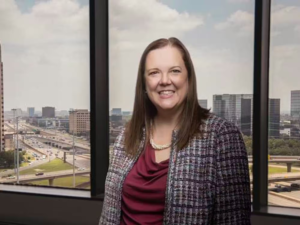
The recent Kelly Hunter Obituary, DALLAS, TEXAS, marks the sudden and heartbreaking passing of a true titan in the world of public relations, corporate communications, and high-stakes media strategy. On June 12, 2026, the Dallas community lost a luminary when Kelly Alexander Hunter passed away at the age of 58 following a brief illness. But to simply call her a publicist would be a massive understatement. Kelly was an architect of public perception, a crisis management maestro, and a beloved figure whose 35-year career shaped the way businesses, organizations, and high-profile figures communicated with the world.
When a city loses someone of this magnitude, the ripple effects are felt far beyond her immediate circle of family and friends. Her influence permeated the boardrooms of major tech companies, the bustling kitchens of the hottest Dallas restaurants, and the strategic war rooms where crisis communications are born. Navigating the modern media landscape requires a rare blend of charm, ruthless analytical skills, and an unbreakable ethical compass. Kelly possessed all three in spades.
This comprehensive retrospective doesn’t just honor her memory; it dives deep into the industry she loved. We’ll explore her roots, her monumental impact on the Texas economy, and the complex world of strategic communications. To truly understand the value of a master like Kelly Hunter, we have to look at the broader landscape of crisis management, legal media philosophy, and the high-profile case studies that define modern public relations. Her life was a masterclass in how to manage a narrative, and her legacy will continue to teach communications professionals for decades to come.
Early Life and Formative Years in Texas
Every great communicator starts somewhere, and for Kelly Hunter, that journey began in the heart of Texas. Born on June 28, 1967, to parents Joanne Washburn and John Alexander Jr., Kelly was a force of nature from day one. Growing up in the tight-knit Canyon Creek neighborhood, she was surrounded by a community that valued hard work, connection, and Southern hospitality. A few years later, her younger sister Amy was born, cementing a lifelong bond that would become one of Kelly’s greatest sources of joy and support.
If you want to understand how someone becomes a master of public relations, you have to look at their high school years. Kelly attended Plano Senior High School, a place known for its rigorous academics and fiercely competitive extracurriculars. It was here that she found her voice—literally and figuratively—on the Speech and Debate team. Texas high school debate is not for the faint of heart. It’s a brutal, fast-paced intellectual battleground that requires quick thinking, flawless articulation, and the ability to view an argument from every conceivable angle.
This environment was the crucible that forged Kelly’s analytical mind. In debate, you can’t just rely on passion; you need evidence, strategy, and an understanding of human psychology. You learn how to deconstruct an opponent’s narrative while seamlessly building your own. These are the exact skills required to navigate corporate crises and media frenzies.
Following her legendary high school debate career, Kelly took her talents to the University of Texas at Austin. Immersing herself in the vibrant campus life, she became an active member of the Alpha Phi sorority, specifically the Omega Chapter. College wasn’t just about earning a degree for Kelly; it was about building a network. The relationships she forged at UT Austin became the foundation of a professional network that she would nurture and expand for the rest of her life. She graduated not just with an education, but with a profound understanding of human connection—a trait that would define her entire career in Dallas.
The Evolution of a Media Maven
When Kelly entered the professional world, the public relations industry was wildly different than it is today. It was an era of fax machines, Rolodexes, and physical press releases mailed out to newsrooms. But Kelly possessed an innate adaptability that allowed her to ride the waves of technological change without ever losing her footing. Her career spanned an impressive 35 years, primarily anchored at two powerhouse agencies: Shiroma Southwest and Sunwest Communications.
At Sunwest Communications, she eventually rose to the role of Vice President of Lifestyle, Hospitality, and Tech. This is where she truly left her mark. The Dallas-Fort Worth metroplex was exploding, transitioning from an oil-and-gas town into a cosmopolitan hub of technology, world-class dining, and entertainment. Kelly was right there at the forefront, shaping the narrative of this transformation.
One of her crowning professional achievements was her instrumental role in the creative alliance with the City of Addison, particularly regarding the annual Addison Kaboom Town. If you aren’t familiar with it, Kaboom Town is not just a local fireworks show; it is consistently ranked as one of the top Fourth of July celebrations in the entire United States. Managing the PR for an event of this scale is a logistical nightmare. You’re dealing with traffic advisories, VIP management, hundreds of media credentials, local government liaisons, and crisis contingencies (what if the weather turns? what if there’s an emergency?).
Kelly orchestrated these campaigns like a maestro conducting a symphony. She understood that PR wasn’t just about getting a mention in the paper; it was about creating an experience that drove foot traffic to local businesses, boosted municipal revenue, and created lasting memories for families. She helped independent restaurants thrive in an incredibly competitive market by telling their unique stories, making the chefs the stars, and making the dining public feel a personal connection to the food.
Bridging Public Relations and Legal Philosophy
To fully appreciate the genius of high-level strategic communications, we have to look beyond lifestyle PR and examine the intersection of media strategy and legal philosophy. While Kelly was famous for her work in hospitality and tech, the principles of crisis management she championed are identical to those used in the highest-stakes litigation PR.
When a corporation, a public figure, or a small business faces a catastrophic lawsuit or public scandal, the PR strategist is just as crucial as the lead defense attorney. This brings us to a fascinating philosophical conflict: the clash between the First Amendment and the Sixth Amendment. The First Amendment guarantees freedom of the press and free speech, meaning the media has the right to report aggressively on allegations, lawsuits, and scandals. The Sixth Amendment guarantees a defendant the right to a fair trial by an impartial jury.
But how do you find an impartial jury when the “court of public opinion” has already convicted the defendant based on sensationalized media coverage?
This is where litigation PR steps in. The old-school legal philosophy was to simply say, “No comment,” and fight the battle exclusively inside the courtroom. Attorneys hated PR people. They viewed any public statement as a liability that could be used against their client in discovery or on the witness stand. But modern communications strategists changed this paradigm. They argued that in the digital age, silence is no longer viewed as a neutral legal stance; silence is interpreted by the public as an admission of guilt.
If a company is sued for negligence, or a CEO is accused of misconduct, and they say nothing, the opposing side controls 100% of the narrative. The brand’s stock plummets, partners pull their sponsorships, and by the time the legal team wins the case three years later, the company is bankrupt. The philosophy of modern crisis PR—the kind of strategic thinking Kelly Hunter brought to the table—is that you must defend the reputation concurrently with the legal defense. You have to feed the media beast to prevent it from eating you alive. It requires a delicate, surgical approach to messaging where every single word is legally vetted but emotionally resonant.
High-Stakes Crisis Management: The Legal Media Landscape
To understand what happens when communications strategies fail, we have to look at the most explosive case studies of our modern era. When you study the Kelly Hunter Obituary, DALLAS, TEXAS, you’re looking at a life built on controlling chaos. Let’s analyze what happens when the chaos cannot be controlled, and the PR strategy completely unravels.
Analyzing the Harvey Weinstein Media Circus
There is perhaps no greater case study in modern crisis communications and legal media strategy than the spectacular downfall of Harvey Weinstein. In October 2017, when the New York Times and the New Yorker dropped their bombshell investigations detailing decades of sexual misconduct, it wasn’t just a legal crisis; it was a cultural earthquake that birthed the global #MeToo movement.
From a public relations perspective, Weinstein’s initial response was a masterclass in what never to do. Against the advice of seasoned crisis managers, he released a bizarre, rambling statement where he quoted Jay-Z, talked about his anger management issues, and promised to channel his energy into taking down the NRA. It was disjointed, arrogant, and completely failed to read the room. Instead of mitigating the damage, the statement threw gasoline on the fire.
As the criminal charges mounted, Weinstein hired a revolving door of high-profile defense attorneys, eventually landing on Donna Rotunno, a lawyer famous for defending men accused of sexual assault. The PR strategy shifted. Rotunno decided to go on the offensive in the media. She embarked on a highly publicized media tour, giving interviews to major outlets and podcasts, attempting to shift the narrative to personal responsibility and the dangers of a “cancel culture” mob.
However, a skilled PR strategist will tell you that a media offensive only works if the public is willing to listen. Rotunno’s strategy backfired spectacularly. Her interview on a prominent New York Times podcast, where she made controversial statements about the victims’ choices, went viral for all the wrong reasons. The attempt to manipulate the court of public opinion ended up alienating the jury pool and enraging the public even further.
The Weinstein case proved that the old playbook of bullying the press and spinning the narrative is dead. In the age of social media, authenticity and accountability are the only currencies that matter. You cannot PR your way out of a systemic, decades-long pattern of abuse. The role of a crisis manager in that scenario isn’t to spin the un-spinnable; it’s to advise the client to step down immediately, express unconditional remorse, and let the legal process play out quietly. Weinstein’s team did the opposite, resulting in maximum reputational and legal destruction.
Rudy Giuliani and the Court of Public Opinion
If the Weinstein case was a failure of reading the cultural room, the saga of Rudy Giuliani is a catastrophic failure of mixing legal defense with unhinged political theater. Giuliani, once universally revered as “America’s Mayor” for his steady leadership following the 9/11 attacks, systematically dismantled his own legacy through a series of baffling media appearances and legally disastrous press conferences.
Following the 2020 election, Giuliani spearheaded the legal effort to challenge the results. But instead of fighting these battles quietly in a courtroom with sworn affidavits and airtight legal briefs, he fought them on television and in parking lots. The now-infamous press conference at Four Seasons Total Landscaping in Philadelphia is studied in university PR courses as the ultimate brand disaster. Standing in front of a garage door, sandwiched between a crematorium and an adult bookstore, Giuliani delivered wild, unsubstantiated claims. The visual optics alone destroyed any remaining shred of legal credibility.
But the real crisis management failure came with the defamation lawsuits. Giuliani publicly and repeatedly targeted two Georgia election workers, Ruby Freeman and Shaye Moss, accusing them of fraud. He made these statements on podcasts, news networks, and social media. A competent media strategist would have tackled him to the ground before letting him speak those words. In defamation law, repeating a false claim to millions of people exponentially increases the damages.
Because Giuliani ignored the basic principles of legal communications—namely, don’t say things publicly that you can’t prove in court—he was hit with a staggering $148 million defamation judgment. This judgment directly led to his bankruptcy filing. Furthermore, his reckless media strategy led to disbarment proceedings in New York and Washington, D.C.
Giuliani’s tragic downfall highlights the absolute necessity of the work professionals like Kelly Hunter do. Lawyers are trained to argue the law; they are not always equipped to understand optics, public sentiment, or the devastating consequences of a rogue soundbite. A master PR strategist acts as the guardrail, keeping the client from driving their own reputation off a cliff.
Kelly Hunter’s Media Presence and Professional Impact
Returning to Dallas, we see the stark contrast between those media trainwrecks and the quiet, effective, and brilliant work of Kelly Hunter. Kelly didn’t rely on stunts or aggressive spin. Her media presence was built on the most valuable, yet rarest commodity in public relations: trust.
Kelly understood that reporters are not the enemy; they are partners in the ecosystem of information. She cultivated deep, decades-long relationships with editors, food critics, business reporters, and television producers across Texas. When Kelly pitched a story, journalists knew it wasn’t fluff. They knew she had vetted the facts, prepared her clients, and organized the logistics flawlessly. If a restaurant was opening, she didn’t just send an email; she curated an experience that allowed the media to taste, feel, and understand the vision behind the brand.
More importantly, she was a master of the pivot. When the media landscape shifted violently from print newspapers and broadcast television to digital blogs, social media influencers, and viral marketing, many old-school PR veterans dug in their heels and refused to adapt. Kelly embraced it. She understood that a food blogger with 50,000 engaged local followers could drive just as much traffic to a new restaurant as a review in a legacy newspaper. She integrated digital strategies, SEO, and experiential marketing into her campaigns long before it was the industry standard.
Her professional impact wasn’t just about making her clients look good; it was about elevating the entire standard of communications in Dallas. She demanded professionalism, kindness, and strategic rigor from her teams, setting a benchmark that other agencies scrambled to meet.
Community Impact: Transforming Dallas and Beyond
You cannot measure a life solely by press clippings and client retainers. Kelly Hunter’s true legacy lies in the tangible impact she had on her community. Dallas is a city built on commerce, but it is sustained by culture. Kelly was a fundamental pillar of that culture.
Think about the small business owner who poured their life savings into a new concept, terrified that no one would walk through the doors. Kelly was the bridge between their dream and the public’s reality. By crafting compelling narratives, she filled dining rooms. By driving foot traffic, she kept local economies thriving. The restaurants and tech startups she represented didn’t just survive; they hired more staff, expanded their footprints, and contributed to the tax base of the city.
Her work with Addison Kaboom Town is a perfect example of macroscopic community impact. The event doesn’t just entertain half a million people; it injects millions of dollars into the local economy. Hotels sell out. Restaurants are packed to capacity. Retail spaces see a massive surge in sales. Kelly’s PR campaigns were the engine driving that economic vehicle.
During times of economic uncertainty—particularly when the hospitality industry faced unprecedented challenges—Kelly worked tirelessly behind the scenes. She advised business owners on how to communicate with their customers, how to pivot to takeout models, and how to maintain brand loyalty when their doors were physically closed. She didn’t just do it for the paycheck; she did it because she genuinely loved the city of Dallas and the people who made it vibrant.
Mentorship and the Next Generation of Strategists
Behind the press releases and the major events was a woman who cared deeply about the future of her industry. Kelly was a mentor in the truest sense of the word. The public relations industry is notoriously tough, with high burnout rates, demanding clients, and unpredictable hours. For young women entering the field, it can be an intimidating gauntlet.
Kelly made it her mission to lift as she climbed. Drawing on her roots from her Alpha Phi days at the University of Texas, she created informal networks of support for young communicators. She taught them how to write a pitch that actually gets read. She taught them how to sit in a boardroom full of executives and confidently hold their ground. Most importantly, she taught them that you don’t have to sacrifice your humanity or your kindness to be wildly successful in a competitive market.
Her personal life was the anchor that allowed her to be so giving in her professional life. She was a devoted wife to her husband, John, and a loving mother. Despite the grueling demands of her career, she always knew where to draw the line between work and home. She showed the next generation that work-life balance isn’t a myth; it’s a boundary you have to fiercely protect.
When Kelly passed away suddenly on June 12, 2026, the shockwaves through the Dallas PR community were palpable. Social media feeds and legacy guestbooks were flooded with tributes not just from powerful CEOs, but from junior account executives who remembered a time when Kelly took them out for coffee and gave them the confidence to succeed.
Frequently Asked Questions (FAQ)
Who was Kelly Hunter from Dallas, Texas? Kelly Alexander Hunter was a highly respected and beloved public relations professional based in Dallas, Texas. Over her 35-year career, primarily with Shiroma Southwest and Sunwest Communications, she became a driving force in the city’s lifestyle, hospitality, and tech PR sectors. She passed away at the age of 58 on June 12, 2026.
What were Kelly Hunter’s major professional achievements? Kelly was instrumental in shaping the public narrative for countless Dallas restaurants, businesses, and municipal events. One of her most notable ongoing projects was her creative PR alliance with the City of Addison, specifically managing the media strategy for Addison Kaboom Town, one of the largest Fourth of July fireworks displays in the country.
How does litigation PR and crisis management differ from traditional public relations? Traditional PR is proactive, focusing on building brand awareness, launching products, and generating positive media coverage. Crisis management and litigation PR are reactive and highly defensive. They involve managing catastrophic events, lawsuits, or scandals by controlling the narrative, mitigating reputational damage, and working closely with legal teams to ensure public statements do not compromise a legal defense.
Why are cases like Harvey Weinstein and Rudy Giuliani studied in crisis communications? These cases represent catastrophic failures in media strategy. Weinstein’s team failed to understand the cultural shift of the #MeToo movement, utilizing aggressive media tactics that alienated the public and the jury pool. Giuliani mixed legal defense with unsubstantiated political rhetoric, directly resulting in massive defamation judgments and the loss of his law license. They are studied to teach PR professionals what not to do.
What is the legacy of Kelly Hunter in the Dallas community? Her legacy is one of connection, economic growth, and mentorship. She helped build the Dallas-Fort Worth culinary and tech scenes by telling their stories to the world. Beyond her client work, she is remembered as a kind, sharp-witted mentor who paved the way for young women in the communications industry.
A Lasting Legacy in Dallas and Beyond
The Kelly Hunter Obituary, DALLAS, TEXAS, is more than a record of dates and surviving family members; it is a testament to a life lived with purpose, intellect, and profound grace. In a world where public relations is too often dismissed as mere “spin,” Kelly proved that strategic communication is a vital art form. It builds communities, saves businesses, and shapes the cultural narrative.
From her early days dominating the Texas debate circuits to her decades orchestrating the media landscape for the biggest events in Dallas, she never lost her quick wit or her genuine love for people. We study the monumental failures of public figures in crisis precisely because it highlights the immense, invisible value of the professionals who keep the ship steady. Kelly was the ultimate steady hand.
Dallas shines a little less brightly without her, but the infrastructure of connection she built will outlast us all. She was a good friend, a great mother, a devoted wife, and an absolute titan of industry. Her adventure, which began in Texas in 1967, leaves behind a legacy of excellence that will inspire the next generation of communicators to speak truth, value relationships, and always control the narrative with integrity. May she rest in peace.